
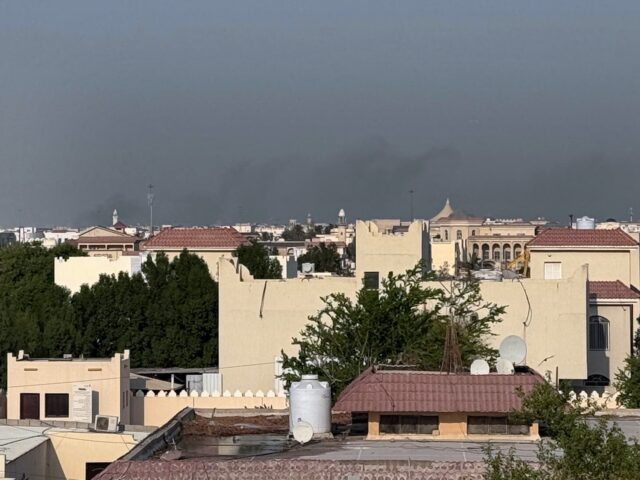
Israel stunned the world this week with a surprise strike on Hamas leaders hiding in Doha, Qatar—a country long considered a close U.S. ally and home to America’s largest military base in the Middle East. The bold move exposed just how comfortably these terror masterminds have been living while directing brutal attacks against Israel.

Explosions shook Doha on Tuesday, initially without explanation. Hamas’s top brass, who have enjoyed lavish lifestyles in luxury hotels and mansions, suddenly found themselves within Israel’s crosshairs.
In a joint statement, the Israel Defense Forces and Shin Bet declared:
“The IDF and ISA conducted a precise strike targeting the senior leadership of the Hamas terrorist organization. For years, these members of the Hamas leadership have led the terrorist organization’s operations, are directly responsible for the brutal October 7th massacre, and have been orchestrating and managing the war against the State of Israel. Prior to the strike, measures were taken in order to mitigate harm to civilians, including the use of precise munitions and additional intelligence. The IDF and ISA will continue to operate with determination in order to defeat the Hamas terrorist organization responsible for the October 7th massacre.”
Until now, Israel had resisted targeting Hamas leaders in Qatar—a country that not only hosts the massive U.S. Al Udeid air base, but was also formally designated by President Biden in 2022 as a “major non-NATO ally.” President Trump had previously visited the base during his regional trip in 2017, underscoring its strategic importance.
Qatar’s government rushed to condemn the strike. “Targeted residential buildings housing several members of the Political Bureau of Hamas,” Foreign Ministry spokesman Majed Al Ansari claimed, calling it a “criminal assault” and “a blatant violation of all international laws and norms.” Doha warned it posed “a serious threat to the security and safety of Qataris and residents in Qatar.”
But the reality is clear: Qatar has for years hosted Hamas’s political leadership, shielding them from accountability while presenting itself to Washington as a mediator and partner. Its claim to strong defense capabilities also took a hit—the strike was a public embarrassment, coming after Qatar boasted in June of successfully intercepting Iranian missiles.
Sources familiar with the situation suggested the U.S. was likely aware of Israel’s plans, and Qatar may have been privately informed. That would make Doha’s public outrage little more than political theater.
Prime Minister Benjamin Netanyahu made Israel’s position crystal clear:
“Today’s action against the top terrorist chieftains of Hamas was a wholly independent Israeli operation. Israel initiated it, Israel conducted it, and Israel takes full responsibility.”
This strike signals more than just a military operation—it underscores Israel’s resolve to pursue Hamas leaders wherever they hide. It also raises difficult questions for Washington. Why has Qatar, a so-called ally, been allowed to harbor terrorists in luxury while benefiting from American protection and status?
At stake is not only Israel’s security, but also U.S. credibility. America’s allies—and its enemies—are watching to see whether Washington continues to indulge double-dealing partners like Qatar, or whether it will stand firmly with those who fight terror head-on.