
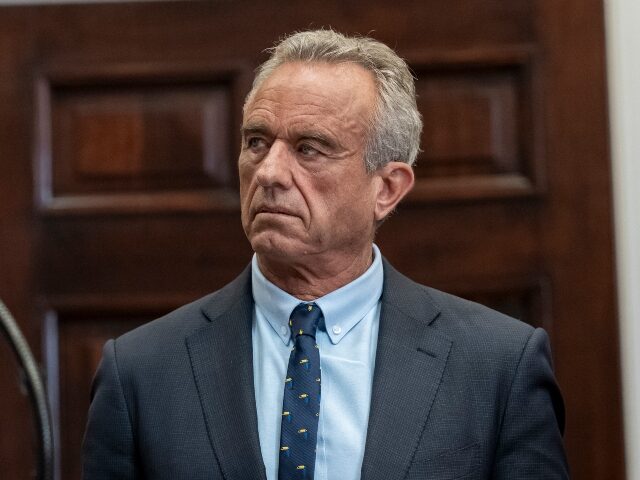
In a stunning development that could mark a turning point in the battle against censorship and corporate overreach, the Department of Justice’s Antitrust Division will file a statement of interest in a major antitrust lawsuit involving Robert F. Kennedy Jr.’s nonprofit, Children’s Health Defense (CHD), and the Trusted News Initiative—a global consortium of Big Tech and mainstream media giants.

At the heart of the case? A damning accusation that Silicon Valley and corporate media teamed up to silence independent voices and suppress dissent—particularly viewpoints that challenge the establishment narrative on everything from elections to public health.
The Trusted News Initiative (TNI) is a self-appointed alliance of 23 Big Tech and legacy media players, including Meta, Google, BBC, the Associated Press, Reuters, and The Washington Post. They claim their goal is to battle “harmful disinformation” in real time—especially during sensitive political moments.
What that really meant in practice? According to CHD: a coordinated effort to blacklist rival outlets, muzzle dissident reporting, and enforce ideological conformity across the digital public square.
CHD’s lawsuit, currently pending in the U.S. District Court for the District of Columbia, argues that TNI’s actions amounted to a “massive group boycott”—a per se violation of federal antitrust law. The group contends that, since 2020, TNI has worked to deny alternative media platforms access to the major online distribution channels controlled by Big Tech. In other words, they locked out the competition.
Under antitrust law, that’s not just unethical—it’s illegal.
Led by Assistant Attorney General Gail Slater, the Antitrust Division is now officially weighing in. In a statement of interest set to be filed Friday, the DOJ asserts that the First Amendment does not grant tech and media monopolies a blank check to collude against competitors.
The Justice Department minced no words:
“Individual liberty—and consumer welfare—benefit greatly from viewpoint competition in news markets and can suffer when that competition is reduced.”
Translation: silencing alternative voices isn’t just bad for free speech—it’s an antitrust violation when it stems from coordinated action among market giants.
The DOJ flatly rejects TNI’s claim that their censorship campaign falls outside antitrust scrutiny simply because it involves “misinformation.” The DOJ counters that viewpoint discrimination in the name of truth policing is still restraint of trade, and that media cartels do not enjoy a constitutional “sanctuary” from the law.
Breaking the Monopoly on Truth
The DOJ’s filing outlines two major points:
- Diversity in News Sources Is Legally Protected
The law has long recognized that competition in information quality is just as vital as competition in prices or products. Restricting which viewpoints reach the public—especially via collusion—is a classic antitrust injury. - Concerted Censorship Is a Violation
The DOJ says it doesn’t matter whether TNI simply “flagged” content or “collectively decided” what to silence. In both cases, joint decision-making among competitors about what information reaches the public is subject to scrutiny under Section 1 of the Sherman Act.
In a revealing moment, DOJ official Dina Kallay recently warned against “product-fixing”—a tactic where firms collectively decide what features or functions to restrict. That description fits TNI’s coordination efforts to a T.
The antitrust laws, as the DOJ emphasizes, are a necessary check on digital monopolies, especially when the consequences include silencing political speech and independent journalism.
Slater—who helped advance President Trump’s “America First Antitrust” philosophy—has made it clear this battle is about more than corporate balance sheets. It’s about defending the everyday American’s right to speak freely, think independently, and hear the other side.
In past remarks against Google, Slater didn’t mince words:
“You know what is dangerous? The threat Google presents to our freedom of speech, to our freedom of thought, to free American digital markets.”
This DOJ move adds serious momentum to the broader fight against corporate censorship masquerading as “fact-checking.” And if the courts agree, it could break the back of the elitist media-tech alliance that’s long policed the boundaries of acceptable opinion in America.
For now, the antitrust spotlight is on TNI. But the message to Big Tech and legacy media is unmistakable: collusion to crush dissent will not go unchecked.