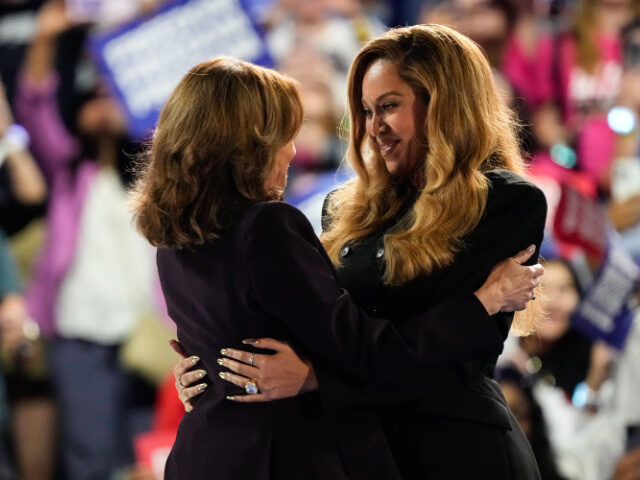
In yet another twist that underscores growing concerns over political integrity, President Donald Trump has accused Kamala Harris’s failed presidential campaign of violating federal law—this time for allegedly funneling millions of dollars to celebrities in exchange for public endorsements.
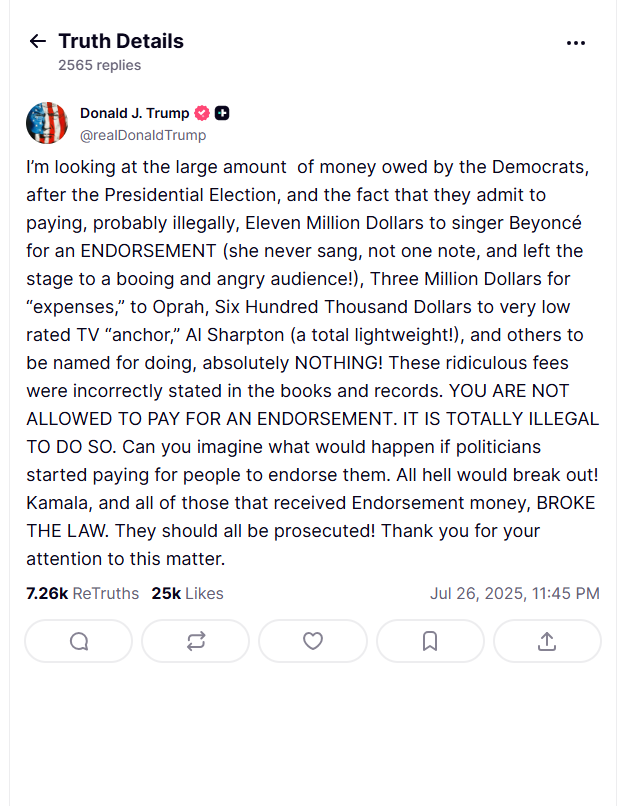
In a post on Truth Social, Trump didn’t mince words:
“I’m looking at the large amount of money owed by the Democrats, after the Presidential Election, and the fact that they admit to paying, probably illegally, Eleven Million Dollars to singer Beyoncé for an ENDORSEMENT (she never sang, not one note, and left the stage to a booing and angry audience!), Three Million Dollars for ‘expenses,’ to Oprah, Six Hundred Thousand Dollars to very low rated TV ‘anchor,’ Al Sharpton (a total lightweight!), and others to be named for doing, absolutely NOTHING!”
Trump went further, calling out the bookkeeping as suspicious:
“These ridiculous fees were incorrectly stated in the books and records. YOU ARE NOT ALLOWED TO PAY FOR AN ENDORSEMENT. IT IS TOTALLY ILLEGAL TO DO SO. Can you imagine what would happen if politicians started paying for people to endorse them. All hell would break out! Kamala, and all of those that received Endorsement money, BROKE THE LAW. They should all be prosecuted! Thank you for your attention to this matter.”
This isn’t just about bad optics—it’s a red flag for potential abuse of campaign finance laws. While celebrity appearances and rally support are nothing new in politics, cutting million-dollar checks under the guise of “expenses” raises serious questions.
Reports back up the financial concerns. The Washington Examiner uncovered that Harris’s campaign paid $1 million to Oprah Winfrey’s company on October 15. Winfrey denied being paid for her endorsement, yet she appeared alongside Harris at multiple high-profile events during the final stretch of the election, including a televised townhall in September and a Philadelphia rally the night before Election Day. At the rally, Winfrey issued what many interpreted as a scare tactic: warning women that if they didn’t vote, they “might never get the chance again.”
Meanwhile, Harris’s team has also denied paying Beyoncé for an endorsement. But filings tell a different story. According to the FEC, Harris’s campaign paid Beyoncé’s production company $165,000—a hefty sum for someone who supposedly didn’t perform or engage publicly with the campaign.
Even Rev. Al Sharpton’s organization was on the receiving end. Finance records show Harris for President sent $500,000 to the National Action Network (NAN)—Sharpton’s nonprofit—in two payments last fall. Shortly after, Sharpton hosted Harris on his MSNBC show PoliticsNation, tossing her softball questions in what appeared more like a PR segment than a news interview.
Let’s not forget: Harris’s campaign ended with a stunning $20 million debt, despite raising a staggering $1 billion. Now, we’re seeing where some of that money may have gone—to Hollywood royalty and liberal media figures, rather than the grassroots volunteers or real infrastructure that might’ve reached everyday Americans.
Back in May, Trump sounded the alarm, calling for a “major investigation” into these activities. He raised another key question: just how much was Bruce Springsteen paid for his lackluster performance during the campaign trail?
“Candidates aren’t allowed to pay for ENDORSEMENTS, which is what Kamala did, under the guise of paying for entertainment,” Trump wrote. “In addition, this was a very expensive and desperate effort to artificially build up her sparse crowds.”
What’s unfolding isn’t just about potential illegal payments—it’s about trust, accountability, and whether the rules apply equally to everyone, even the elites. If proven true, these payments aren’t just a campaign misstep—they’re a slap in the face to every hardworking American who plays by the rules while the politically connected write blank checks to buy influence.
Stay tuned. The implications of this could shake up more than just campaign finance regulations—it could shift the narrative on political favoritism, celebrity collusion, and who’s really pulling the strings.