

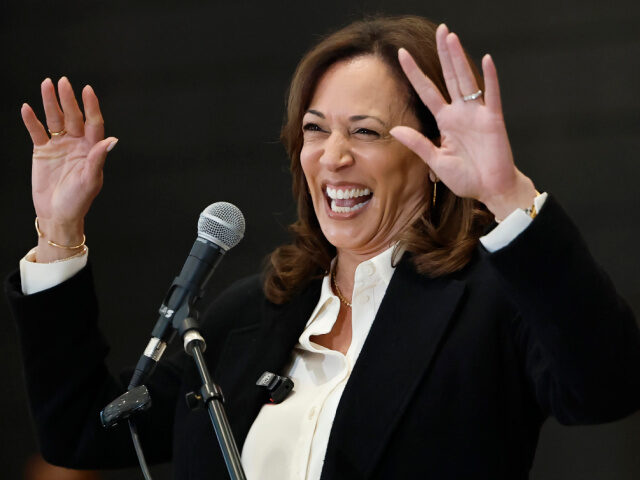
Kamala Harris is officially stepping away from the political spotlight—at least when it comes to elected office. In a carefully worded statement released this week, the former vice president ruled out a run for California governor in 2026, saying her focus would shift elsewhere. The announcement marks yet another pivot from a once-rising Democratic star whose trajectory has grown increasingly uncertain.

“In recent months, I have given serious thought to asking the people of California for the privilege to serve as their Governor,” Harris said. “I love this state, its people, and its promise. It is my home. But after deep reflection, I’ve decided that I will not run for Governor in this election.”
After a 2024 presidential bid that ended in steep disappointment and left her campaign nearly $20 million in the red—despite raising an eye-popping $1 billion—Harris appears to be repositioning herself. She noted that her “leadership—and public service—will not be in elected office,” and promised to be out “listening to the American people” and helping elect Democrats across the country.
For many, this latest move isn’t surprising—it’s revealing.
Her statement struck a familiar tone: lofty language, vague direction, and plenty of talk about “new methods” and “fresh thinking.” Harris said she had spent the past six months “reflecting on this moment in our nation’s history” and what the “best way” would be for her to “continue fighting for the American people.” It’s a message that may play well on the coasts, but offers little clarity for voters outside the Democratic donor class.
“We must recognize that our politics, our government, and our institutions have too often failed the American people, culminating in this moment of crisis,” Harris said. “As we look ahead, we must be willing to pursue change through new methods and fresh thinking—committed to our same values and principles, but not bound by the same playbook.”
In a way, that line says more than she may have intended. Voters have been watching the Democratic establishment double down on tired strategies—rhetoric-heavy, results-light—and the consequences have piled up: inflation, crime, border chaos, and eroding confidence in core institutions. When Harris talks about failure, many Americans would agree—but often see her and her party as part of the problem, not the solution.
And despite the polished press statements, the political reality is harder to ignore. According to Politico, major Democrat donors who backed Harris during her failed White House run are now hesitant about her “possible return to the campaign trail.” With a campaign staff still trying to manage massive debt and public enthusiasm waning, the governor’s race would have been an uphill climb—even in deep-blue California.
Meanwhile, the Democratic primary field for 2026 is already shaping up. Former HHS Secretary Xavier Becerra and ex-Los Angeles Mayor Antonio Villaraigosa are among those vying for the state’s top job. The fact that Harris—once touted as the future of her party—is stepping aside rather than leading the charge speaks volumes about her political footing.
Still, Harris insists she’s not done with politics altogether.
“I look forward to getting back out and listening to the American people, helping elect Democrats across the nation who will fight fearlessly, and sharing more details in the months ahead about my own plans.”
What those plans are remains to be seen. But after a string of lackluster performances on the national stage, her withdrawal from the California governor’s race may be less about strategy—and more about political survival.
For now, Harris says she’ll stay involved behind the scenes. Whether voters—or her party—still want her out front is a different question entirely.




L:eader of whom?
ремонт телевизоров sharp aquos в москве [url=https:/sharp-remont-moskva.ru/]дом ремонт телевизор шарп[/url]