
Over the past year, I dug deep into the six major cases launched against Donald Trump—cases that unfolded in rapid succession between his two administrations. The evidence points to a coordinated effort riddled with irregularities, political motives, and in some instances, actions that may cross the line into criminal territory. The American people—especially those who voted for Trump—deserve to know the truth.

Now, there’s a glimmer of hope. The Department of Justice has reportedly opened a criminal probe into New York Attorney General Letitia “Tish” James, while the Office of the Special Counsel investigates Special Counsel Jack Smith himself. If pursued honestly, this could signal a long-overdue return to accountability and the rule of law.
That’s why certain key players in these lawfare campaigns warrant full investigation. Here’s what’s already come to light:
THE E. JEAN CARROLL CASE
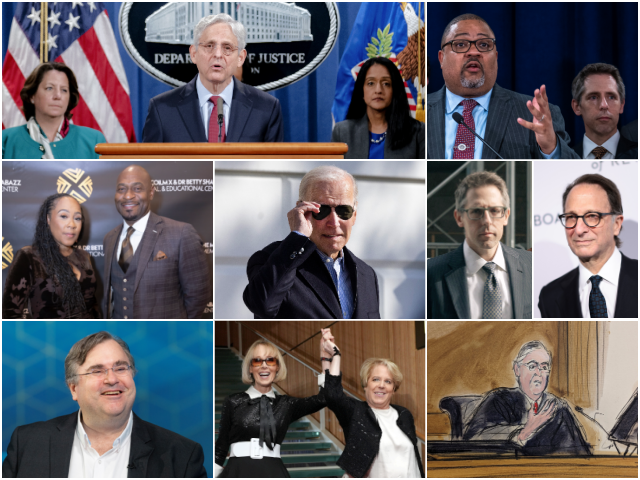
Democrat mega-donor Reid Hoffman bankrolled E. Jean Carroll’s defamation lawsuit against Trump—a case that played out in Trump-hostile New York courtrooms. Hoffman, who once pledged to spend “as much as I possibly can” to defeat Trump, has funneled millions through dark-money nonprofits. Carroll, aided by well-connected attorney Roberta Kaplan, received legal backing from groups heavily funded by Hoffman.
While this case moved forward, Hoffman made regular visits to Joe Biden’s White House. What was discussed? The public deserves an answer. Notably, the case was originally pushed by outspoken anti-Trump pundit George Conway.
Judge Lewis Kaplan, presiding over the trial, blocked critical evidence—including the “black wool Donna Karan coatdress” Carroll claimed she wore during the alleged incident. Trump’s defense argued the dress didn’t even exist at the time and could have disproved her story via DNA testing. “When they found out there was nothing on the dress… the judge said ‘nope,’” Trump recalled in 2025. Meanwhile, Kaplan allowed the infamous Access Hollywood tape as character evidence against Trump.
The outcome? Nearly $90 million in judgments—eight times more than Carroll originally sought.
THE STORMY DANIELS CASE
Manhattan DA Alvin Bragg, propelled into office with backing from a Soros-linked fund, ran on a promise to go after Trump—even as he went soft on violent offenders. His case hinged on a “crime that doesn’t exist,” in the words of liberal legal scholar Alan Dershowitz, but it secured the made-for-TV “perp walk” Bragg needed.
Bragg’s star recruit was Matthew Colangelo, a Biden DOJ official who inexplicably stepped down from being the third-highest-ranking federal prosecutor to join Bragg’s local office. The timing—right after Democrats lost the House in 2022—suggests strategic political maneuvering. Biden insists there was no coordination, but Colangelo’s role strains credibility.
THE GEORGIA RICO CASE
Fulton County DA Fani Willis brought in Nathan Wade, her romantic partner, to spearhead the prosecution—despite his complete lack of RICO experience. Wade logged hours-long meetings at the White House just before and after his appointment. Willis herself met with Vice President Kamala Harris months before the indictment.
Then there’s Jeff DiSantis, a former Biden White House aide allegedly serving as a political conduit between Washington and Willis’s office. The pattern is clear: loyal operatives parachuting in to handle Trump cases at the state level.
THE JACK SMITH CASES
Attorney General Merrick Garland appointed partisan prosecutor Jack Smith to an unconstitutional Special Counsel role—allowing 18 months of aggressive pursuit of Trump during campaign season. Behind Garland stood two key Biden DOJ power brokers: Deputy AG Lisa Monaco and Associate AG Vanita Gupta.
Monaco, an Obama-Biden loyalist with deep ties to political operatives, was said to be the real driver of DOJ actions against Trump. Gupta, with a history of hostility toward conservative causes, added ideological weight to the effort. Trump has long maintained Monaco “is really running the Justice Department… viciously and illegally.”
And looming in the background is Andrew Weissmann, the Mueller investigation’s chief architect, whose fingerprints appear on nearly every major anti-Trump legal push.
THE TISH JAMES CASE
Judge Arthur Engoron’s top clerk, Allison Greenfield, allegedly violated New York ethics rules with excessive donations to Democrat candidates. Trump has suggested she wielded outsized influence in the case—raising serious conflict-of-interest questions.
THE WHITE HOUSE CONNECTION
Pull the thread, and it all leads back to the Biden White House. The evidence outlined in Breaking the Law strongly suggests that these prosecutions were not independent but part of a coordinated strategy to sideline Trump ahead of 2024—using the justice system as a political weapon.
No one on this list has faced real accountability. If their actions were above board, proper investigations could clear them. But if they crossed legal lines to destroy a political opponent, they should face the same justice they claim to uphold.
America cannot afford a precedent where political power dictates legal outcomes. The stakes here are bigger than Donald Trump—they go to the heart of whether we remain a nation of laws or slide into government by partisan force.