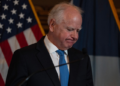


When President Trump stepped in to take federal control of D.C. policing, he received vicious backlash—from both local officials and even their families. Governor Tim Walz’s daughter, Tia Castellano, erupted at the move, posting on X:

“Donald Trump’s crime crackdown in DC is btch, baby, wussy, scaredy-cat behavior.”
That outburst didn’t come from a random citizen—it came from the daughter of a governor known for soft-on-crime policies. Worse, it wasn’t a typo or a spot-the-censorship moment—it was a calculated smear, mocking a tough-on-law approach with juvenile insults.
The president invoked Section 740 of the Home Rule Act to place the Metropolitan Police under joint federal control and deploy the National Guard. Trump made his position clear:
“Our capital city has been overtaken by violent gangs and bloodthirsty criminals, roving mobs of wild youth, drugged-out maniacs and homeless people, and we’re not going to let it happen anymore.”
These are higher stakes than political theater. Police data shows the homicide rate in D.C. shot up to 274 in 2023—double the levels seen under Chief Lanier in earlier years. Former Capitol Police Chief Steven Sund confirmed on Breitbart News Daily that they’re still struggling at five to six times the murder rate of other major U.S. cities.
When someone in leadership, or their own family, dismisses federal intervention with taunts like “scaredy-cat,” it signals a broader refusal to confront lawlessness. That stance doesn’t protect crime victims—it emboldens gangs and undermines public safety.
America didn’t elect leaders to stand by while cities crumble. Federal backup isn’t “unsettling”—it’s a security-first response to an urgent crisis. The real question isn’t who’s offended by the spike in crime—it’s who’s responding with real solutions, not insults.
This moment reveals stark differences: one side mocking law enforcement, the other side empowering it. And that choice matters—for D.C. and for America.