

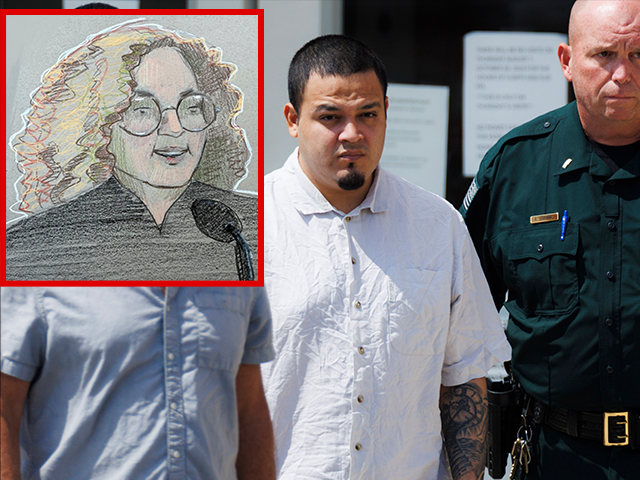
Once again, America’s courts are being used as a weapon to frustrate common-sense enforcement of our immigration laws. Magistrate Judge Barbara D. Holmes is the latest federal judge to flex her judicial muscle in ways that obstruct President Trump’s efforts to remove dangerous criminals from the country. This time, the beneficiary is none other than Kilmar Abrego Garcia, a self-admitted MS-13 member with a rap sheet that reads like a blueprint for organized crime.

On Tuesday, Abrego Garcia walked free from federal custody. His release follows a June 22 ruling from Judge Holmes, who denied the government’s motion to keep him detained before trial. It’s an outcome that left many asking why an individual with this record is being given yet another reprieve.
The government’s case against Abrego Garcia is extensive. Beyond being in the country illegally, he faces disturbing allegations: soliciting child pornography, engaging in human trafficking, taking part in arms and drug trafficking, and even being tied to the murder of a rival gang member’s mother. During a June hearing, Holmes limited testimony about his alleged sexual relationships with female passengers—including minors—whom he was purportedly helping smuggle into the country. These restrictions, combined with the decision to release him, amount to a clear example of how courtroom technicalities and activist judges can undermine the basic duty of government to protect its citizens.
The Department of Justice painted a damning portrait in its filings. According to prosecutors, Abrego Garcia abused the very women he trafficked, to the point where his own co-conspirators confronted him and told him to stop. Authorities further allege that about 30 percent of the people he smuggled were MS-13 members and that since at least 2016, he was moving around 50 illegal aliens into the U.S. every month. In other words, this was not a one-off crime. It was a systematic, industrial-scale operation enriching cartels and fueling violent crime in American communities.
This is not the first time the judiciary has interfered in the Trump administration’s attempts to deal with Abrego Garcia. Judge Paula Xinis of the District of Maryland previously ordered that he be returned to the U.S. from El Salvador, giving El Salvador’s president just three days to comply—despite the fact that her authority does not extend to foreign heads of state. Chief Judge James Boasberg of the U.S. District Court for D.C. has also ruled in favor of keeping illegal aliens like Abrego Garcia in the country, even as the administration tried to act under longstanding powers such as the Aliens Enemies Act. Each ruling, when viewed together, reveals a pattern: judges substituting their own politics for the rule of law.
Judge Holmes herself has a long history of Democrat activism. Public records show she has donated hundreds of dollars to Democratic candidates, including $250 to Hillary Clinton’s 2008 campaign. Before her 2015 appointment as a magistrate judge, she held leadership roles in various bar associations and organized events that leaned heavily into fashionable political causes. She chaired campaigns tied to the Legal Aid Society—an organization that has not only championed diversity, equity, and inclusion initiatives but also provided legal services to illegal immigrants. These activities raise glaring concerns about whether she can remain impartial in a case involving a violent criminal who entered this country illegally.

In her own words, Holmes once remarked, “I am also inspired by the new citizens I meet during naturalization ceremonies, by their determination, and especially by their appreciation for things that we too often take for granted, like the privileges of citizenship.” That statement may sound noble, but in the context of her record it underscores a troubling blind spot: a refusal to distinguish between those who follow the law to become Americans and those who exploit it to remain here illegally.
The bigger picture is clear. When unelected judges repeatedly shield dangerous criminals from accountability, they undermine the principle of equal justice under the law. While communities face the burden of crime, trafficking, and gang violence, the bench too often acts as a sanctuary for those responsible. President Trump’s administration has made public safety a priority, but judicial activism continues to stand in the way.
The case of Kilmar Abrego Garcia is not just about one man. It is about whether the American people—or unelected judges—will decide who gets to stay in this country. And with every ruling that puts the interests of criminals above citizens, trust in the system erodes a little more.








These activist un elected judges need to be removed as soon as they show to be protecting illegals over citezens. Done. Gone and never to hold a Judiciary position again, clerk or lawyer.
If Congress will not pass legislation to reign in the activist judges and SCOTUS can’t find the guts to use the DOJ to enforce their rulings, perhaps the Executive Branch can muster the fortitude to arrest and hold these judges on corruption, obstruction, and dereliction of duty! Or have the Citizen Militia take jurisdiction and hold public tribunals with public executions!
The corruption of the Constitution and the Judicial system must END!