

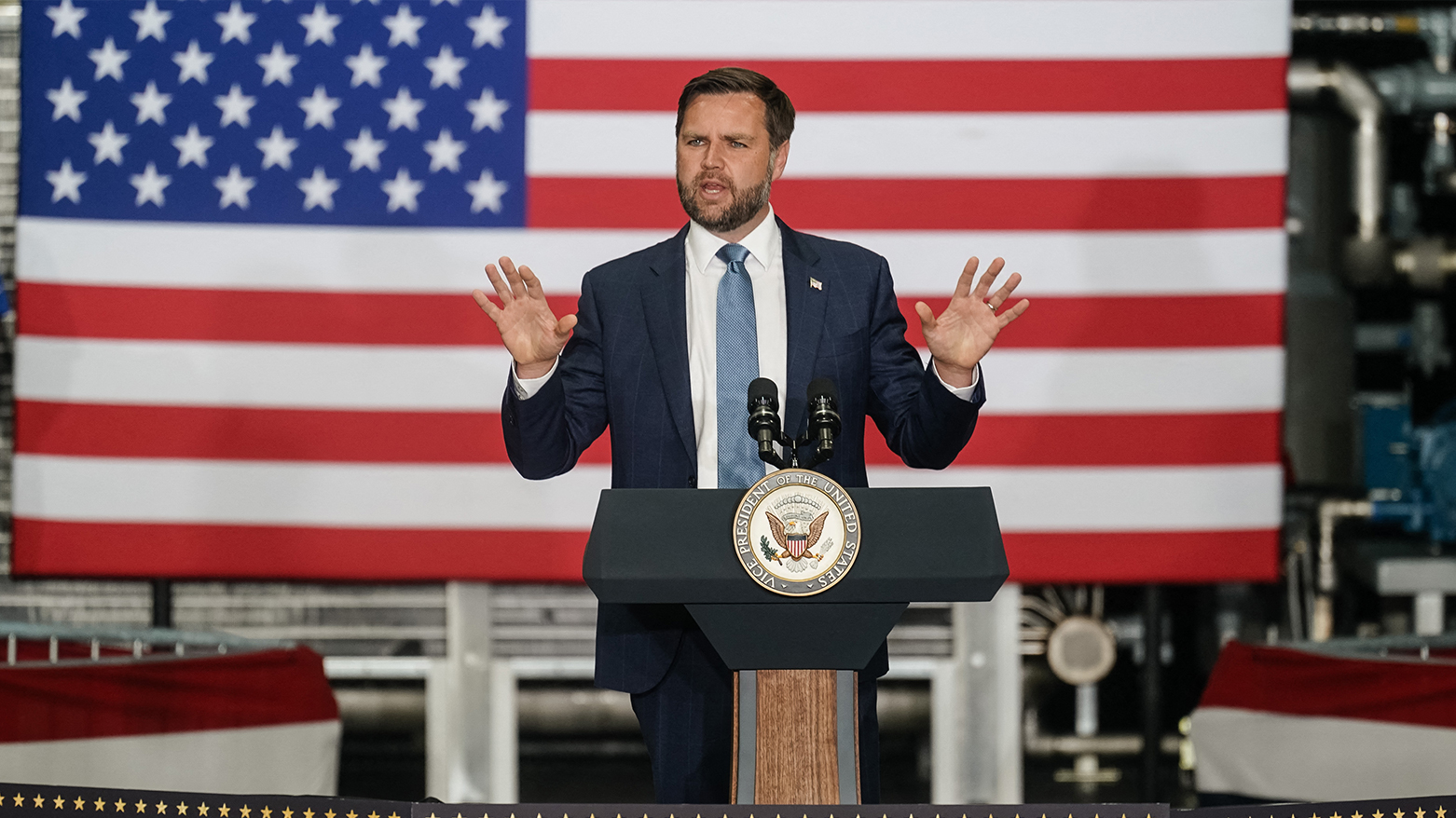
On Sunday’s broadcast of NBC’s Meet the Press, Vice President JD Vance gave Americans an insider’s look into the ongoing Trump-led negotiations aimed at ending the costly and grinding Russia-Ukraine war. For the first time in years, he suggested, Russia has begun to bend.

WELKER asked whether Moscow might simply be stringing President Trump along, noting that the Russian foreign minister recently claimed there was no meeting planned between Putin and Zelenskyy and insisted “there needs to be an agenda first.”
VANCE responded firmly: “No, not at all, Kristen. I think the Russians have made significant concessions to President Trump for the first time in three and a half years of this conflict. They’ve actually been willing to be flexible on some of their core demands. They’ve talked about what would be necessary to end the war. Of course, they haven’t been completely there yet, or the war would be over. But we’re engaging in this diplomatic process in good faith. We are trying to negotiate as much as we can with both the Russians and the Ukrainians to find a middle ground to stop the killing. I think what the president has tried to do here is try to engage in very aggressive, very energetic diplomacy because this war is not in anyone’s interest. It’s not in Europe or the United States’s interest. We don’t think it’s in Russia or Ukraine’s interest to keep going. So we’re going to keep on pushing for a diplomatic solution. And one final point about this, Kristen. If you look historically, whenever you have a complicated war with a lot of death and destruction, it kind of goes in fits and starts. There are hills and valleys to the negotiation. We sometimes feel like we’ve made great progress with the Russians, and sometimes, as the president has said, he’s been very frustrated with the Russians. And we’re going to keep on doing what we have to do to bring this thing to a close. I don’t think it’s going to happen overnight. I think that we’re going to continue to make progress. But, ultimately, whether the killing stops, that determination is going to belong to whether the Russians and Ukrainians can actually find some middle ground here.”
The exchange highlights a striking shift. For nearly four years, Moscow’s posture has been rigid, uncompromising, and openly dismissive of Western overtures. Now, under Trump’s pressure, there appears to be movement. The vice president’s framing makes clear: unlike the bureaucratic drift of prior years, this is a moment of real engagement where America is again leading—through direct diplomacy instead of endless blank checks.
WELKER pressed further, pointing to Moscow’s rejection of Trump’s ceasefire plan, the lack of any confirmed summit, and Russia’s recent strike on a U.S.-linked factory in Ukraine that fortunately killed no one. She asked what made Vance think Putin was serious about peace.
VANCE replied: “Well, I didn’t say they conceded on everything. But what they have conceded is the recognition that Ukraine will have territorial integrity after the war. They’ve recognized that they’re not going to be able to install a puppet regime in Kyiv. That was, of course, a major demand at the beginning. And importantly, they’ve acknowledged that there is going to be some security guarantee to the territorial integrity of Ukraine. Again, have they made every concession? Of course, they haven’t. Should they have started the war? Of course, they haven’t. But we’re making progress, Kristen. And what I, I admire about the president in this moment is he’s not asking three and a half years ago. He’s not, you know, trying to focus on every nitpicky detail of how this thing started three and a half years ago. He’s trying to focus on the nitpicky details of now, of what do the parties disagree on? What do they agree on? And how do you build a foundation from one side of that ledger to the other so that you can stop the killing?”
That statement captures Trump’s approach: forward-looking, pragmatic, and focused on results rather than endless posturing about the past. In contrast to Washington’s entrenched habit of finger-pointing and pouring out taxpayer dollars with no end in sight, this strategy prioritizes peace through strength and persistence.
The implications are significant. If Russia is now willing to recognize Ukraine’s territorial sovereignty, that undercuts one of Moscow’s earliest and most aggressive ambitions—the installation of a compliant regime in Kyiv. Such movement signals that sustained diplomatic pressure, backed by America’s leverage, is more effective than indefinite escalation or open-ended spending.
This moment also reminds Americans of a larger truth: wars of this complexity rarely resolve in one dramatic breakthrough. They grind on, with brief advances and setbacks, until leaders with determination and vision step in to steer events toward resolution. For the first time in years, Americans are seeing evidence that such progress may be possible.
While no one should underestimate the difficulty of securing peace, the developments Vice President Vance described show that under Trump’s leadership, the U.S. is once again pursuing common-sense diplomacy that puts American interests first and seeks to prevent more needless loss of life abroad.