

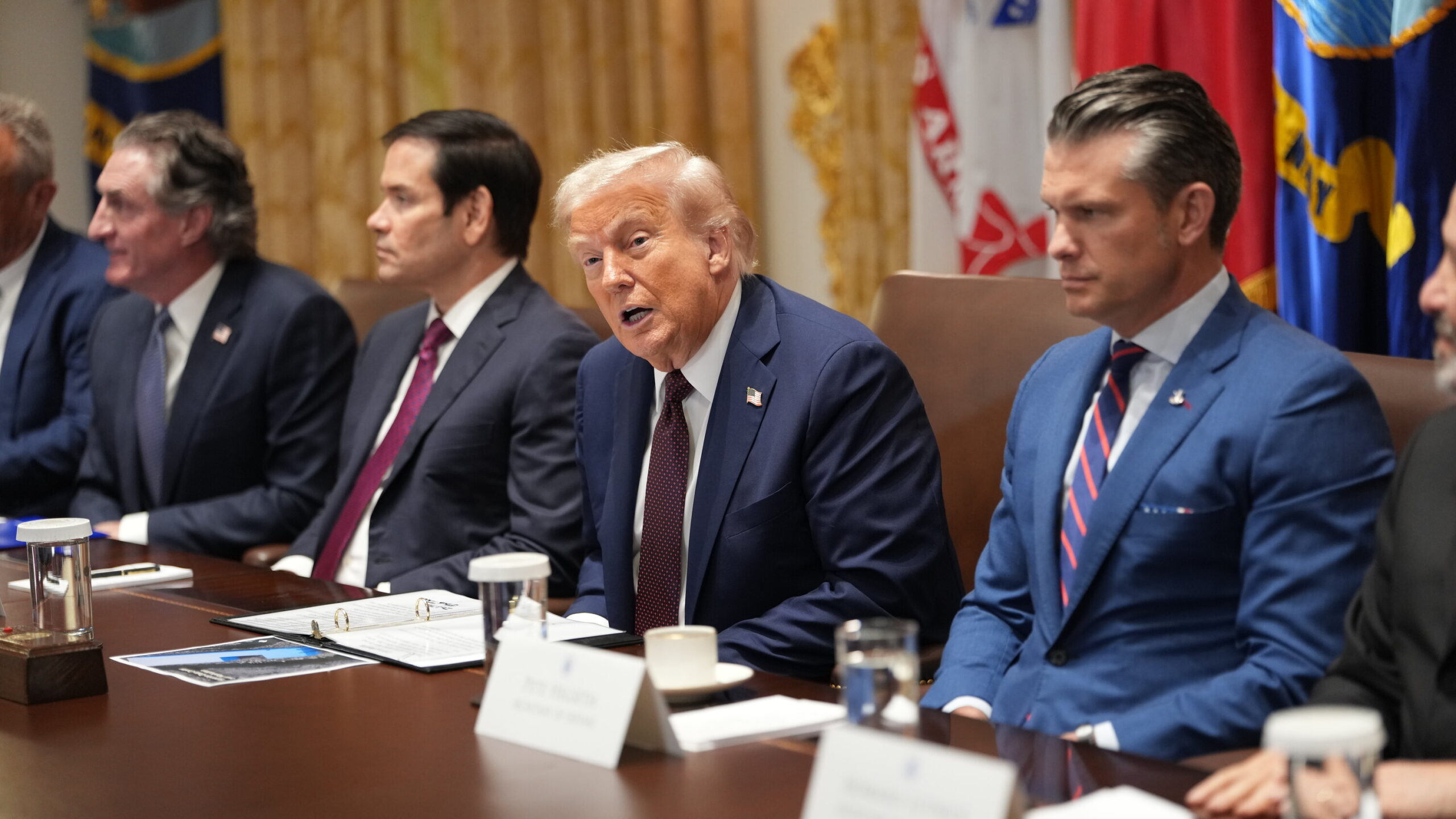
President Donald Trump announced Tuesday that his administration will seek the death penalty for murders committed in Washington, D.C.—a bold move aimed at restoring law and order in a city plagued for years by violent crime.

“If somebody kills somebody in the capital, Washington, DC, we’re going to be seeking the death penalty. And that’s a very strong preventative, and everybody that’s heard it agrees with it,” Trump said during a White House Cabinet meeting. “I don’t know if we’re ready for it in this country, but we… have no choice.”
The president emphasized that states will still make their own choices on the issue, but the federal government has a duty to act in the nation’s capital. His remarks came after a remarkable stretch in D.C.—a full 12 days with no homicides—following his decision to federalize law enforcement in the city. That streak ended Tuesday morning when a man died from gunshot wounds.
The results since Trump took charge have been undeniable. In the 11 days after federal action began (August 11–22), carjackings dropped an astonishing 83 percent compared to the 11 days prior. Motor vehicle thefts fell by 37 percent, robberies were cut by more than half, homicides fell 50 percent, assaults with dangerous weapons dropped 32 percent, and overall crime declined by 14 percent. Those are the kinds of numbers D.C. leaders had long promised but never delivered.
Trump signaled that Washington will not be the only city to see a crackdown. “And after we do this, we’ll go to another location, and we’ll make it safe also. We’re going to make our country very safe. We’re going to make our cities very, very safe,” he declared. Turning his focus to Chicago, Trump didn’t mince words: “Chicago is a mess. You have an incompetent mayor, grossly incompetent. We’ll straighten that one out, probably next. That’ll be our next one after this, and it won’t even be tough. And the people in Chicago, Mr. Vice President, are screaming for us to come. They’re wearing red hats just like this one.”
For years, progressive leadership in cities like Washington and Chicago has failed to protect residents, excusing crime instead of cracking down on it. Trump’s approach is straightforward: restore deterrence, back the police, and put criminals on notice. In just days, the difference has been dramatic. If that success is replicated elsewhere, America’s most dangerous cities could finally see what real law-and-order leadership looks like.