
The assassination of Turning Point USA founder Charlie Kirk has sent ripples far beyond America’s borders, drawing strong words from European conservatives who see his death as both a personal loss and a dangerous sign of where political violence can lead. Kirk, only 31 years old, was killed at a debate event in Utah on Wednesday. President Donald Trump called it an assassination, and leaders across Europe echoed that grim description, pointing to the broader implications for democracy and free expression.

European sovereigntists and conservatives described Kirk as a towering voice for liberty and warned that his killers acted out of “utter desperation and cowardice,” unable to defeat him in debate. Their statements remind us that while America’s divisions feel uniquely sharp, the struggle to preserve freedom of thought and speech is a shared battle across the West.
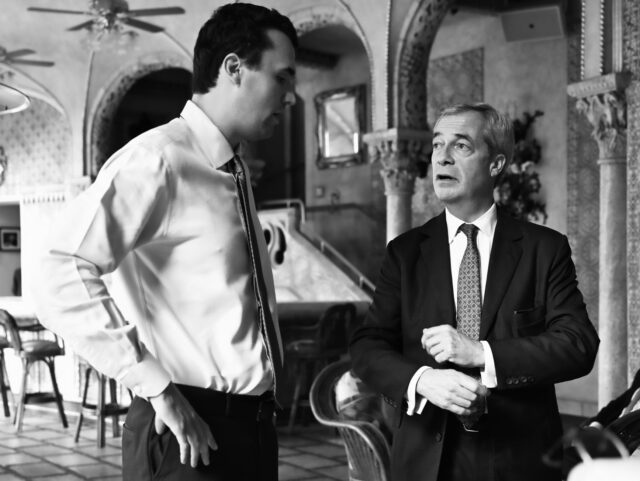
Reform UK leader Nigel Farage, who worked closely with Kirk to launch the British offshoot of Turning Point in 2019, spoke with visible sorrow. He wrote, “This is a very dark day for American democracy” and said he felt “desperately sad” for Kirk and his family. On GB News, where he hosts an evening talk show, Farage recalled: “I met Charlie Kirk 10 years ago. I knew Charlie Kirk, I had been to his studios in Arizona and I spoke at Turning Point rallies… I was with him in London trying to get Turning Point UK off the ground. I went on his radio show on a regular basis.”
Reflecting on Kirk’s work, Farage said: “He was an enormous voice, and Trump regarded Charlie very highly indeed… for a young man he made a massive impression and was an important part of reviving, in young people in America, belief in very good values.” For Farage, this was not just the loss of an ally but of “the most extraordinary political influencer in America over the past decade. A remarkable man.” He warned that the United States is bitterly divided and that the United Kingdom is “not far behind,” noting the rise of “voices of intolerance” who are “very dangerous” and seek to silence free expression.
Former British Prime Minister Boris Johnson added his voice, calling Kirk “a shining new martyr to free speech” and praising his “courage.” Johnson wrote, “The murder of Charlie Kirk is a tragedy, and a sign of the utter desperation and cowardice of those who could not defeat him in argument. Charlie Kirk has been killed not for espousing extremist views – because he didn’t. He has been killed for saying things that used to be simple common sense. He has been killed because he had the courage to stand up publicly for reasonable opinions held by millions and millions of ordinary people both in the US and Britain.”
Johnson’s framing cuts to the heart of what conservatives see as the true danger: ordinary opinions—once considered mainstream—are now branded intolerable by cultural elites. When people are murdered for voicing common-sense convictions, democracy itself is under threat.
Even members of Britain’s current left-wing government, including Prime Minister Sir Keir Starmer and Foreign Minister Yvette Cooper, issued condolences. Starmer remarked: “We must all be free to debate openly and freely without fear – there can be no justification for political violence.” Yet Turning Point UK pushed back, reminding the public that many in the ruling government had themselves fueled animosity toward Kirk. At the time of Turning Point UK’s launch in 2019, the now-Deputy Prime Minister called it evidence of “sinister forces… taking hold of our country.”
In Italy, Prime Minister Giorgia Meloni, a close ally of President Trump, condemned the “atrocious murder” and called it a “deep wound for democracy and for those who believe in freedom.” Her remarks underline a conviction shared by many European leaders: this was not simply an attack on one man, but on the very principle of free expression that binds together the West’s democratic societies.
Hungarian Prime Minister Viktor Orban drew a direct parallel between Kirk’s death and the attempted assassination of Slovak Prime Minister Robert Fico last year. Orban stated: “Yesterday, we lost a true defender of faith and freedom. Our deepest condolences go to the Kirk family and to the American people. Charlie Kirk’s death is the result of the international hate campaign waged by the progressive-liberal left.” He went further: “We must stop the hatred! We must stop the hate-mongering left!”
Other populist leaders echoed the same warning. In Germany, Alternative for Deutschland (AfD) leader Alice Weidel hailed Kirk as “a fighter for freedom of speech” who was “shot by a fanatic who hates our way of life and discussion.” In France, National Rally leader Jordan Bardella noted that the “dehumanizing rhetoric of the left and its intolerance fuels political violence. No one can ignore this poison that is eating away at our democratic societies.”
Taken together, these reactions are not just condolences—they are warnings. When leaders and citizens alike lose the ability to argue ideas without resorting to violence, when the culture rewards silencing rather than debating, democracy itself is diminished. For conservatives across Europe and America, Charlie Kirk’s assassination is more than a crime. It is a symbol of what happens when intolerance festers unchecked, and a call to defend the freedom to speak plainly, without fear, in the face of growing hostility.
This story is developing, and the world will be watching not only for justice in this case but for whether America and its allies reaffirm the values that Kirk himself championed: faith, freedom, and the courage to speak truth in turbulent times.