

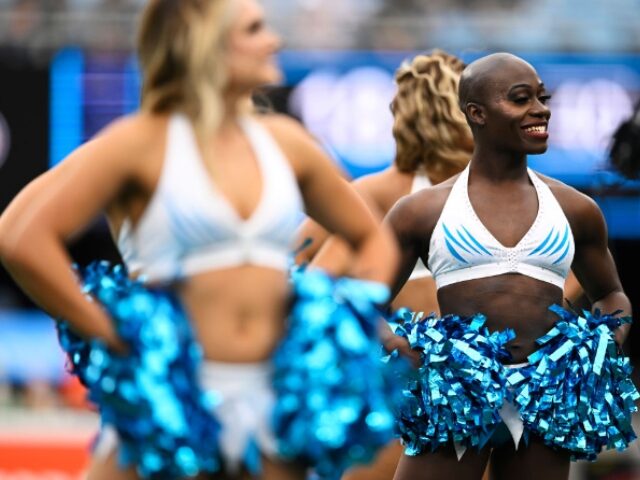
The NFL is facing renewed attention after Justine Lindsay — known as the league’s first transgender cheerleader — claimed he was dismissed from the Carolina Panthers organization solely because of being transgender. The allegation, made during an Instagram Live video, quickly ignited debate around identity politics and whether major institutions are being pressured to prioritize activism over performance standards.

Lindsay stated in the video, “I was cut because I’m trans,” according to Blavity. He pushed back against any suggestion that he left the team on his own terms: “I don’t wanna hear nobody saying ‘She didn’t wanna come back.’ Why the hell would I not wanna come back to an organization that I’ve been a part of for three years?”
He described himself as “devastated,” “stung,” and “hurt” by the decision, though he insisted he is not attacking the Panthers. “I love them, I appreciate everything that they’ve done for me,” Lindsay said of the team.
Lindsay joined the Panthers’ TopCats cheer squad in 2022 and spent three seasons with the organization. Earlier this year, he publicly announced he would not be returning — a declaration many interpreted as voluntary at the time. Now he claims the team pushed him out. The conflicting messaging highlights one of the ongoing challenges in culturally charged conversations: facts are often overshadowed by narratives shaped to gain public sympathy or political traction.
Back in 2022, Lindsay embraced the spotlight surrounding his trailblazer status, saying, “I’m happy because I was able to break down that door and tell people, ‘Hey, we are not just sexual beings.’ ‘We are actual human beings who want to better ourselves.’ I felt like, why not tell the world: ‘Hey, listen, this is a great accomplishment.’”
That early messaging aligned closely with the broader push inside major entertainment and sports institutions to elevate diversity-driven representation as a core priority. But the result has often been tension between traditional expectations and new identity-based demands — especially in organizations that value consistency, discipline, and public image.
Now Lindsay says he isn’t stepping away from the spotlight. He is preparing to compete in the global transgender pageant Miss International Queen and working on a documentary about his time in the NFL. As he told Outsports in August, “Being in the NFL was a stepping stone to get me where I need to be.” He added that he hopes his journey inspires younger people to pursue their ambitions, “and not let anyone stop them from reaching their goals.”
The story has quickly become part of a larger conversation that many Americans — especially conservative readers — recognize well: the ongoing struggle inside major cultural institutions as they try to balance political expectations, public relations pressures, and operational standards. Whenever identity becomes the central lens for hiring or dismissal disputes, organizations often find themselves caught between activist demands and the common-sense need for clear, uniform performance expectations.
As the situation unfolds, the Panthers have not publicly accused Lindsay of poor performance or misconduct, and Lindsay has not provided details about the team’s reasoning beyond his claim. What remains clear is that professional sports, once a rare refuge from cultural battles, increasingly reflect the same tensions reshaping workplaces, schools, and entertainment spaces across the country.
The Lindsay episode is another reminder of how identity-driven politics continue to generate conflict inside institutions that once operated on shared norms — and how quickly personal disputes can become national flashpoints in today’s climate.