
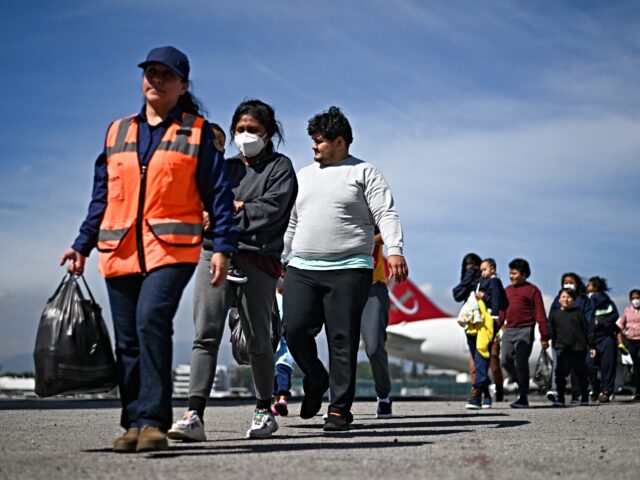
The Trump administration deported more Nicaraguan migrants in the first nine months of 2025 than during the entirety of 2024 and 2023 combined, according to reporting by the newspaper Confidencial. Citing data shared by an unnamed U.S. State Department spokesperson, the outlet reported that the United States deported 6,095 Nicaraguans between January and September of this year.

Confidencial also cited statistics from U.S. Immigration and Customs Enforcement (ICE), stating that Nicaragua has already received 52 percent more deportees in 2025 than the 3,996 deported during 2024, and three times more than the 2,020 deported during 2023. In total, 6,016 Nicaraguans were deported across 2023 and 2024, a figure that is lower than the 6,095 deported as of September 30, according to the State Department information referenced by the publication.
Beyond raw deportation numbers, the pace of removal flights has also increased. According to Confidencial’s review of independent flight data, the United States carried out 54 deportation flights to Nicaragua as of September 30, marking the highest total in at least five years. By comparison, there were reportedly 26 such flights in 2024 and 24 in 2023. The increase in flights reflects a broader shift in federal immigration enforcement toward faster processing and physical removals, which affects coordination between federal agencies, foreign governments, and transportation logistics.
The report also noted that Nicaragua’s government, led by “co-presidential” couple Daniel Ortega and Rosario Murillo, does not routinely publish information about deportation flights or the number of returnees received from the United States. This lack of public reporting has made independent tracking more significant for understanding how migration enforcement decisions translate into real-world outcomes. Transparency around removals, both domestically and abroad, plays a role in public oversight of how federal authority is used, how taxpayer-funded enforcement resources are allocated, and how international agreements are carried out.
Ortega has publicly referenced the deportations only a handful of times during President Trump’s second term. The first public reference came in late April, when, during a regime event commemorating Sandinista commander Tomás Borge, he accused President Trump of committing “crimes against humanity” by deporting illegal migrants. This statement reflects the diplomatic tension that often accompanies large-scale deportations, especially when the receiving country is governed by an authoritarian regime.
Reports published in March indicated that while Ortega agreed to accept deported Nicaraguan nationals, local airport authorities did not list deportation flights in official flight logs. Instead, the flights were reportedly directed to a remote private ramp area, where “they have no contact with passengers departing and arriving at the terminal.” This practice illustrates how operational decisions behind deportations can involve multiple layers of coordination, security, and discretion, both for logistical control and public messaging.
According to Confidencial, Ortega most recently spoke publicly about deportations on September 26, when he said that he welcomes returnees with “open arms.” At that time, he referenced a flight that arrived with 119 deportees, though he did not disclose the broader number of individuals deported throughout the year.
“The dictator assures that deported Nicaraguans are received by personnel from the Ministry of the Interior and the Ministry of Health, who give them a medical examination, provide them with food, and then transport them directly to their homes,” Confidendial wrote.
“This is true even if they are from remote areas such as Waspam or Quilalí, located in the northern Caribbean and northern Nicaragua.”
Taken together, the increased number of deportations and flights highlights how immigration enforcement priorities translate into operational and diplomatic outcomes. For U.S. officials, these figures represent measurable outputs of border and interior enforcement efforts, while for foreign governments, they raise questions of transparency, capacity, and public accountability. For American taxpayers and communities, the data provide insight into how federal resources are being used to carry out removal operations and the broader impact of immigration policy decisions on national security, public safety, and institutional trust.