
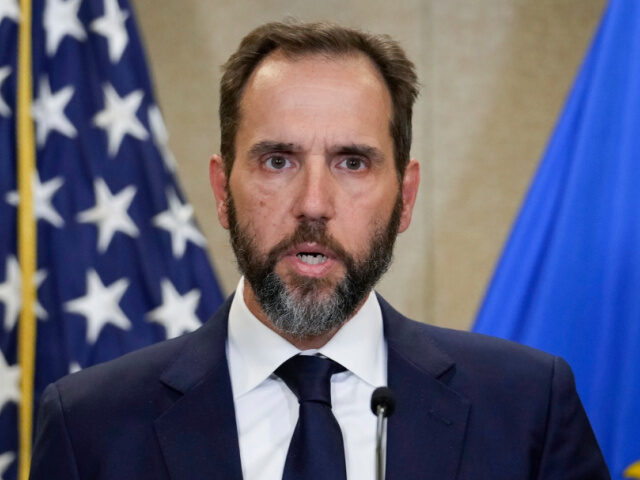
Former Justice Department Special Counsel Jack Smith told members of Congress during a private interview Wednesday that his team developed sufficient evidence to support criminal charges against President Donald Trump related to efforts to overturn the 2020 election and the retention of classified documents, even though both cases were later dropped following Trump’s return to the presidency. Smith’s testimony occurred during a closed-door hearing before the House Judiciary Committee, where he addressed questions about his decisions and methods in two high-profile federal investigations that have remained central to debates over the scope and limits of federal law enforcement authority.

According to excerpts from Smith’s opening remarks obtained by the Associated Press, he said his prosecutors reached what he described as “proof beyond a reasonable doubt” that Trump criminally conspired to overturn the 2020 presidential election results. He also stated that investigators gathered “powerful evidence” indicating Trump unlawfully retained classified documents at Mar-a-Lago and obstructed government efforts to retrieve them. The cases were initiated after Smith’s appointment in 2022 by Attorney General Merrick Garland and resulted in formal charges before being discontinued.
Smith explained to lawmakers that his prosecutorial decisions were made independently of political considerations. “I made my decisions in the investigation without regard to President Trump’s political association, activities, beliefs, or candidacy in the 2024 presidential election,” Smith told the committee. He added that his actions were “based on what the facts and the law required.” Smith further told members that if presented with the same evidence again, he would pursue charges against a former president “regardless of whether the president was a Republican or Democrat.”
The decision to abandon the cases followed Trump’s election to the White House, with prosecutors citing long-standing Justice Department legal opinions that a sitting president cannot be indicted. Those internal guidelines, which have shaped federal prosecutorial practice for decades, effectively halted both cases despite what Smith said his team had uncovered. The outcome has renewed attention on how such policies affect accountability when criminal investigations intersect with presidential power.
The House Judiciary Committee, chaired by Rep. Jim Jordan of Ohio, subpoenaed Smith as part of a broader inquiry into federal law enforcement actions during the Biden administration. Lawmakers involved in the investigation have sought testimony and documents to examine whether political considerations influenced prosecutorial decisions. Smith’s attorneys have said he offered to testify publicly more than a month before the subpoena was issued, an offer they said was declined. Trump later told reporters he supported an open hearing.
During his statement, Smith rejected claims that politics shaped his work and described investigative steps taken by his office, including subpoenas for phone records tied to the period surrounding January 6. He told lawmakers that those records were “relevant to complete a comprehensive investigation” and included calls Trump made urging lawmakers to delay certification of the 2020 election results. The testimony adds further detail to how federal prosecutors approached the cases and underscores the ongoing scrutiny of investigative authority, legal standards, and institutional constraints when allegations involve a sitting or former president.