
Russian investigators are examining whether Ukrainian military intelligence played a role in the killing of a senior Kremlin general after a car bomb detonated in Moscow on Monday morning, according to statements from Russian authorities. The incident adds to a growing list of targeted killings connected to the ongoing conflict between Russia and Ukraine, many of which have occurred far from active front lines and inside major cities.

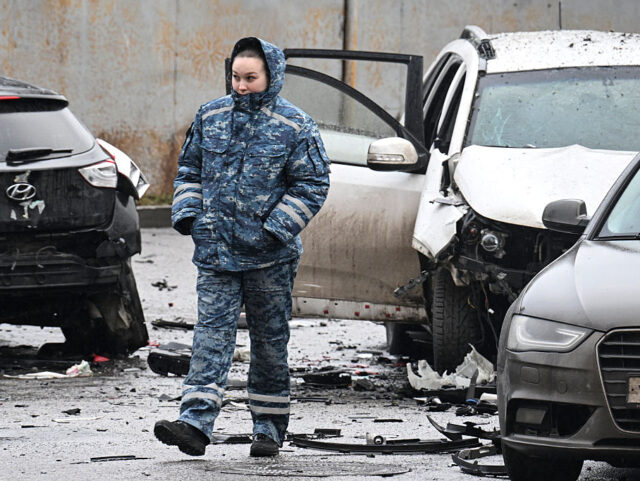
Lieutenant General Fanil Sarvarov, a former commander of Russian forces in Syria and the head of operational training for the General Staff of the Russian Armed Forces, was killed when an explosive device destroyed his vehicle as he exited the car park of a residential block in Moscow. Russian officials said the device was placed under the car, a Kia Sorento, and detonated as Sarvarov drove away. Images released by authorities showed heavily damaged and bloodied wreckage, which investigators are now examining for forensic evidence.
Kremlin spokesman Dmitry Peskov said President of the Russian Federation Vladimir Putin was “immediately” informed of Sarvarov’s death. Russian law enforcement agencies have opened a criminal investigation into “murder committed in a socially dangerous manner” and the illegal trafficking of explosives. Officials stated they are considering the possibility that the killing was “orchestrated” by Ukrainian intelligence services.
At the time of publication, Ukrainian officials had not commented publicly on the incident. However, Ukraine’s military intelligence directorate has previously acknowledged responsibility for multiple assassinations during the war, including operations targeting Russian officials and Ukrainian citizens described by Kyiv as collaborators or traitors. Car bombs have been a recurring method in several of those cases.
The explosion occurred at approximately 0700 local time, and Sarvarov was pronounced dead at the scene. Russian state media described him as one of the most senior officers killed in connection with the conflict since the invasion of Ukraine began. His military career included service in Chechnya, Syria, and Ukraine, and he had received several state honors, including the Order of Courage, the Suvorov Medal, and the Order of Merit to the Fatherland, first and second class.
Russian officials also noted that Sarvarov’s name appeared on the Ukrainian ‘Peacemaker’ [Myrotvorets Center] website, which lists individuals labeled as “traitors, militants, mercenaries, terrorists, Russian war criminals” for reference by “the Security Service of Ukraine.” A profile created in 2022 described Sarvarov as a “Russian war criminal… Participant in the military attack of fascist Russia on Ukraine… Involved in the genocide of the Ukrainian people.” The entry was later updated to state that he had been “liquidated.”
The killing follows a pattern of targeted attacks that have been acknowledged or claimed by Ukrainian authorities during the conflict. Russian officials and state media have pointed to previous incidents involving senior military personnel and officials. In April, senior officer General Yaroslav Moskalik was killed by a car bomb. Major General Mikhail Evgenievich Gudkov was killed by a missile strike in July. Last December, Igor Kirillov was killed by an improvised explosive device outside his apartment.
Ukraine has also claimed responsibility for other killings beyond Russian military officers. Last December, Ukrainian officials announced the killing of a Russian missile scientist in Moscow by shooting, as well as the assassination by car bomb of a Ukrainian prison governor in an occupied area accused of war crimes. As reported at the time:
“These assassinations are just the latest in a line of such ‘liquidations’ by the Ukrainian state taking out what it calls traitors and collaborators. Last month, a senior naval officer accused of war crimes was assassinated in Sevastopol, Crimea, also taken out with a car bomb. Russia confirmed the killing, calling it a terrorist attack. As noted at the time: ‘Russian media reported that the explosion tore off Trankovsky’s legs and he died from blood loss’.”
Additional incidents cited by Russian and international reporting include the October killing of Nikita Klenkov, a high-ranking Russian special operations officer who was shot through his car window shortly after returning to Moscow from the front lines, and the assassination of Andriy Korotkyy, head of security at the Russian-occupied Zaporizhzhia nuclear power plant. Kyiv claimed responsibility for Korotkyy’s killing, describing it as justified “retribution” for alleged war crimes.
Other targets have included Moscow-aligned Ukrainian officials in occupied territories. In April, a Ukrainian official overseeing education in occupied Luhansk was killed by a car bomb and accused of allowing Russian propaganda into schools. Former Ukrainian parliamentarian Ilya Kiva was shot and killed in December 2023, with Ukrainian intelligence calling him a “top traitor, collaborator and propagandist… criminal.” In November 2023, Ukraine also claimed responsibility for killing Mikhail Filiponenko, a pro-Russian lawmaker in occupied Luhansk, alleging his involvement in torture camps.
Some cases have highlighted the evolving methods used to track targets. When Russian submarine commander Stanislav Rzhitsky was shot while jogging in Krasnodar, reports indicated he may have been located through data from the GPS fitness app Strava, illustrating how modern technology can intersect with traditional intelligence operations.
Together, these incidents underscore how the conflict has extended beyond conventional battlefields, raising ongoing questions about internal security, intelligence capabilities, and the reach of wartime operations into civilian areas of major cities.