
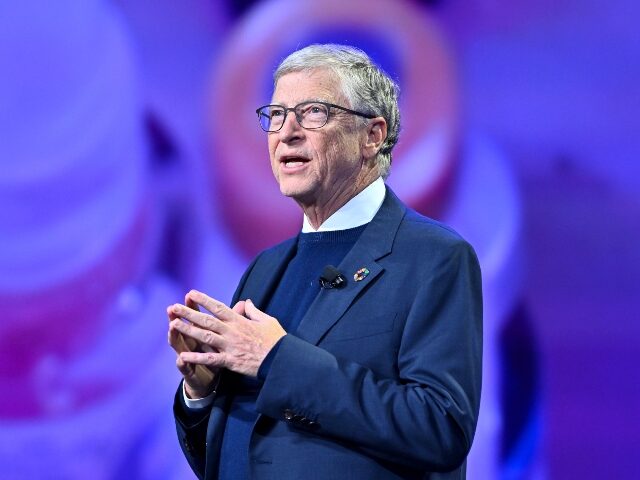
Billionaire technology entrepreneur Bill Gates has raised concerns about the impact of what he describes as online misinformation on future generations, including his own children, and has suggested that emerging technologies could play a role in addressing it. In recent public remarks, Gates framed the issue as both a personal and societal challenge, citing the scale and speed at which information now circulates online and the difficulty of distinguishing accurate material from false or misleading claims.

According to Fortune, Gates discussed these concerns in a recent interview, emphasizing that misinformation has become a more immediate issue for his family. He referenced an incident involving his daughter, Phoebe Gates, who said she was subjected to online harassment, which prompted him to reflect on how digital platforms can amplify unverified or harmful claims. “Seeing my daughter targeted by false claims and harassment online was a wake-up call,” Gates said. “It made me realize that the problem of misinformation is not just about the present, but it’s also about the future we’re leaving for our children.”
Gates explained that he views misinformation as having broader consequences beyond individual cases, including effects on public trust and civic discourse. He noted that false or misleading information can complicate public understanding of issues such as public health and climate policy, particularly when widely shared online. In that context, he described misinformation as a factor that can contribute to polarization and skepticism toward established institutions, which governments and private organizations have increasingly cited as a challenge in the digital age.
“Misinformation is a complex problem that requires a multi-faceted approach,” Gates said. “We need to invest in media literacy programs, support fact-checking organizations, and encourage responsible behavior from social media platforms. But we also need to foster a culture of critical thinking and healthy skepticism, so that people are better equipped to distinguish between credible information and false claims.” His comments align with broader discussions among policymakers, technology companies, and international organizations about how to balance the free flow of information with efforts to reduce demonstrably false content.
Gates also pointed to the potential role of artificial intelligence and machine learning in identifying and flagging content that may be misleading, while acknowledging that automated systems alone cannot resolve the issue. “Technology can be a powerful tool in the fight against misinformation, but it’s not a silver bullet,” he cautioned. “We need to strike a balance between using technology to help us sift through the noise, while also recognizing the importance of human discernment and fact-checking.” His remarks reflect ongoing debates about the appropriate scope of technological moderation, oversight, and accountability in online spaces that are largely operated by private companies.
International organizations have echoed similar concerns in recent years. The World Health Organization has described misinformation as a significant challenge to public health, particularly during the coronavirus pandemic, while the United Nations has launched initiatives aimed at promoting media literacy and countering false information globally. These efforts underscore how questions about information accuracy increasingly intersect with governance, public safety, and national policy considerations.
Gates concluded by framing the issue in generational terms, arguing that access to reliable information is essential for young people navigating complex social and economic environments. “The fight against misinformation is not just about protecting my own children,” he said. “It’s about ensuring that all young people have the opportunity to grow up in a world where they can access reliable information, engage in meaningful dialogue, and make informed decisions about their lives and their communities.”
The discussion comes amid broader scrutiny of Gates’s past positions on global challenges, including climate change and international development. In previous remarks reported by the Associated Press, Gates said that if Press, Gates said that if faced with a choice between eradicating malaria and allowing a small increase in global temperatures, “I’ll let the temperature go up 0.1 degree to get rid of malaria. People don’t understand the suffering that exists today.” He has also spoken publicly about shifting priorities toward reducing poverty and preventing disease, arguing that scientific innovation can address multiple challenges simultaneously.
Gates has additionally commented on global health funding and foreign aid, linking recent projections of increased preventable child deaths to reductions in international assistance by wealthy countries. “There were sudden and massive cuts — you just can’t deny that’s led to lots of deaths,” he stated, while noting that he has held discussions with U.S. officials, including President Donald Trump and Secretary of State Marco Rubio, about future funding approaches. The administration has disputed a direct connection between aid reductions and mortality projections, highlighting ongoing debate over the effectiveness and accountability of large-scale international aid programs.