
A recent article by Politico has drawn attention and criticism for how it framed Christmas celebrations across parts of Europe, describing the holiday as a new “front line” in what it called the continent’s ongoing culture wars. The piece, titled “How the far right stole Christmas,” was published Wednesday and authored by Rome correspondent Hannah Roberts. It focused heavily on Italy and Prime Minister Giorgia Meloni, arguing that she and other European political leaders have turned Christmas traditions into a political “spectacle.”

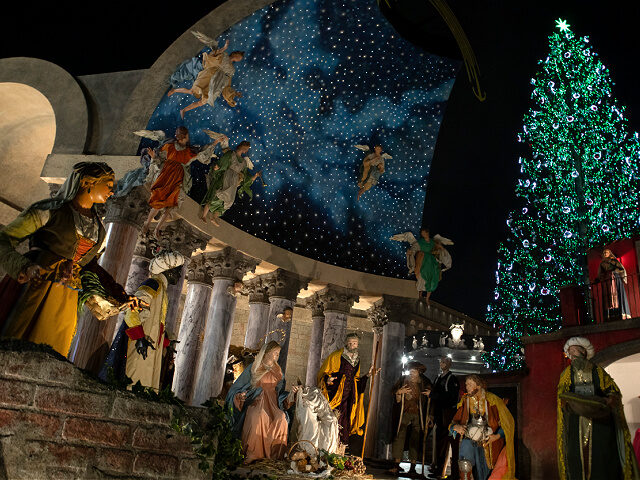
In the article, Roberts wrote that Christmas “is becoming a new front line in Europe’s culture wars,” claiming that certain political parties and leaders are “claiming the festive season as their own.” The reporting centered on Meloni’s public defense of Nativity scenes and long-standing Christmas customs in Italy, a country with deep historical and cultural ties to Catholicism. According to the article, Meloni has emphasized the holiday as part of Italy’s national heritage, describing efforts to downplay or alter traditional celebrations as “ideological” attempts to dilute the country’s identity.
“In Italy, Prime Minister Giorgia Meloni has made the defense of Christmas traditions central to her political identity. She has repeatedly framed the holiday as part of the nation’s endangered heritage, railing against what she calls ‘ideological’ attempts to dilute it,” Roberts wrote. The article presented this approach as part of a broader trend among conservative political parties across Europe.
Roberts extended the same framing to other countries, writing that “France’s National Rally and Spain’s Vox have similarly opposed secularist or ‘woke’ efforts to replace religious imagery with neutral seasonal language, and advocated for nativity scenes in town halls.” In Germany, she wrote, “the Alternative for Germany (AfD) has warned that Christmas markets are losing their ‘German character,’ amplifying disinformation about Muslim traditions edging out Christian ones.”
The article’s framing prompted an immediate response online, particularly on social media, where critics took issue with the characterization of Christmas traditions as a political tool or as inherently tied to extremist ideology. Podcast host Mel K responded on social media, writing, “Not a ‘far right’ concept.. politico is such a joke.” Former Breitbart News journalist Chris Tomlinson also reacted, stating, “Wow, imagine marking Christmas as being Christian. Revolutionary thinking in Europa.”
Other commenters echoed similar sentiments. Former Republican congressional candidate Robby Starbuck wished Politico a “Merry Christmas” while calling them “commies.” Ellie A wrote, “‘Those dang Christians claiming the celebration of their Savior’s birth as their own.’ You might want to ask yourself why you’re being ratioed.” Dustin Grage added, “Jesus is the reason for the season,” followed by, “Cry harder.”
The controversy highlights a broader debate playing out across Europe over the role of religion, tradition, and national identity in public life. Christmas, long observed as both a religious and cultural holiday, has increasingly become a focal point in discussions about secularism, immigration, and the preservation of historical customs. In countries where Christian traditions have shaped public holidays and civic life for centuries, debates over Nativity scenes, religious language, and public displays often intersect with questions about government neutrality, cultural continuity, and social cohesion.
While Politico framed these developments through the lens of political ideology, critics argue the issue reflects deeper tensions about how modern European societies balance longstanding traditions with evolving demographic and cultural realities. The reaction to the article underscores how discussions around Christmas can quickly move beyond the holiday itself, touching on broader concerns about national heritage, public institutions, and the boundaries between cultural expression and political identity.