
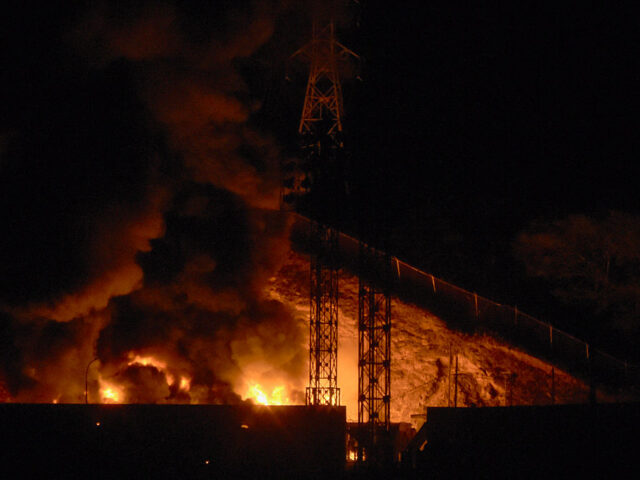
Venezuela declared a nationwide state of emergency early Saturday after a series of explosions struck Caracas and other regions, prompting the government to order full military mobilization and accuse the United States of carrying out an attack. Venezuelan officials said the explosions disrupted power in several neighborhoods of the capital, with smoke seen rising from a nearby military base. Additional strikes were alleged in the regions of Miranda, Aragua, and La Guaira, though independent verification was limited at the time of publication.

President Nicolás Maduro was reported by state authorities to have ordered “all national defence plans to be implemented” and signed an emergency decree granting the government expanded powers. The declaration enables the rapid deployment of military forces and allows authorities to impose further restrictions on civilian movement and activity, measures that are permitted under Venezuelan law during states of emergency. Such decrees have historically centralized decision-making within the executive branch during periods of unrest or external threat.
Venezuela’s government blamed American air strikes for the incident, though U.S. officials had not publicly commented at the time the initial reports emerged. The Associated Press noted that the Federal Aviation Administration issued a Notice to Airmen roughly an hour before the explosions were reported, barring pilots from Venezuelan airspace due to “safety-of-flight risks associated with ongoing military activity.” The notice added to uncertainty surrounding the scope and origin of the events unfolding in and around Caracas.
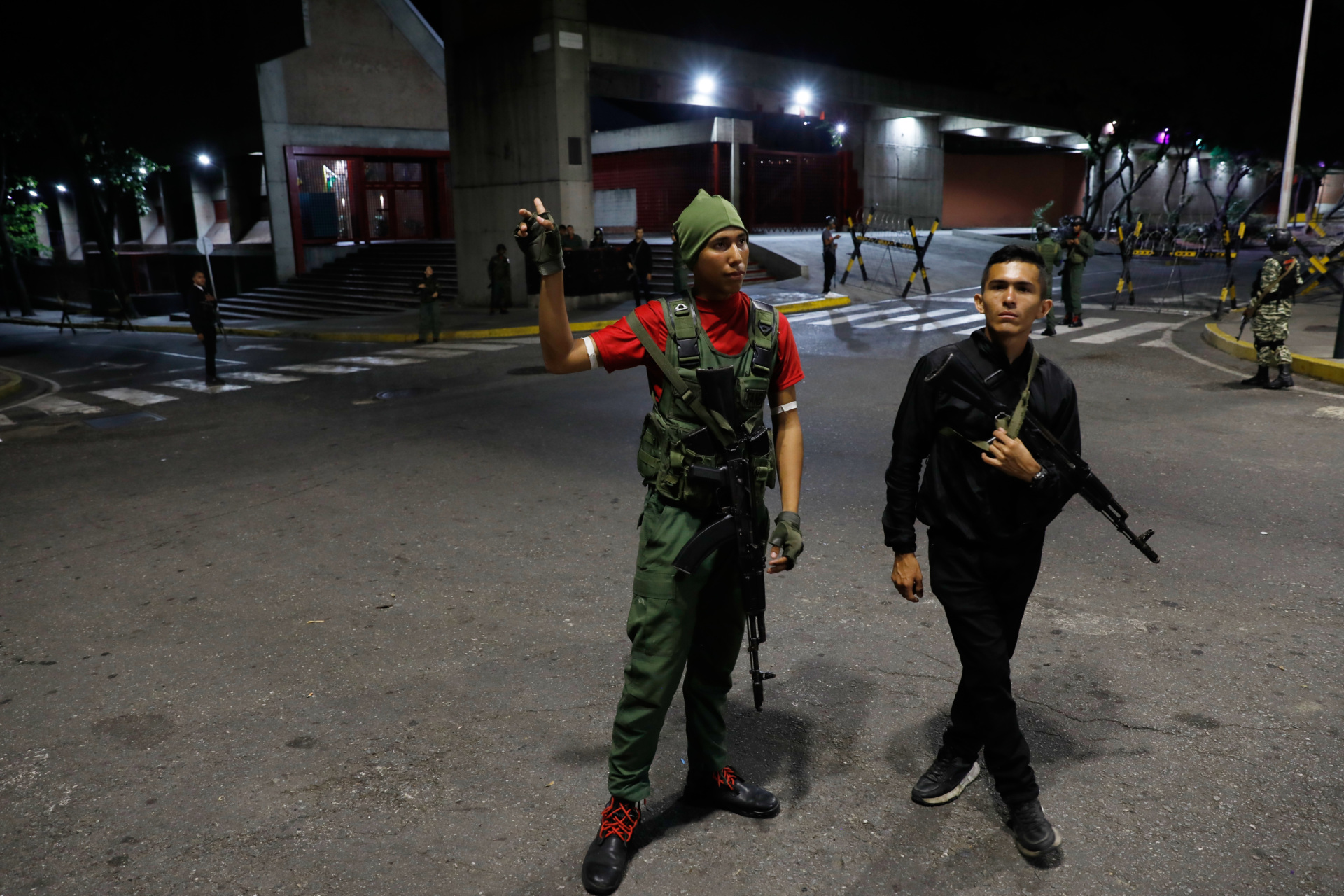
Images from the capital showed members of the presidential guard stationed outside the Miraflores presidential palace after explosions and low-flying aircraft were reported. (AP Photo/Cristian Hernandez) The Venezuelan Ministry of Foreign Affairs released a statement condemning what it described as “the extremely grave military aggression carried out by the current Government of the United States of America,” language that reflects longstanding tensions between Caracas and Washington. The ministry claimed the attack was intended to “seize Venezuela’s strategic resources” as part of a “colonial war,” allegations consistent with past rhetoric used by the Maduro government during international confrontations.
In announcing what it called full national mobilization, the government said Maduro had signed an emergency decree to ensure an “armed struggle… against imperialist aggression.” Such language underscores the administration’s framing of the crisis as an external threat, a characterization that has previously been used to justify expanded security measures and heightened military readiness.
Complicating the situation further, U.S. President Donald Trump stated Saturday morning that Maduro had been “captured overnight and flown out of the country with the assistance of U.S. law enforcement.” The statement, posted publicly, sharply contrasted with earlier reports from Caracas indicating that Maduro had signed the emergency decree and remained in control. At the time of publication, Venezuelan authorities had not publicly responded to the U.S. claim, and details surrounding Maduro’s whereabouts remained unclear. Read the latest at Breitbart News.
The unfolding events place renewed focus on regional security, international airspace controls, and the legal and political consequences of emergency powers in a country already facing prolonged economic strain and institutional instability. As competing claims continue to emerge, governments and international observers are closely monitoring developments for their potential impact on regional stability and global energy markets.