
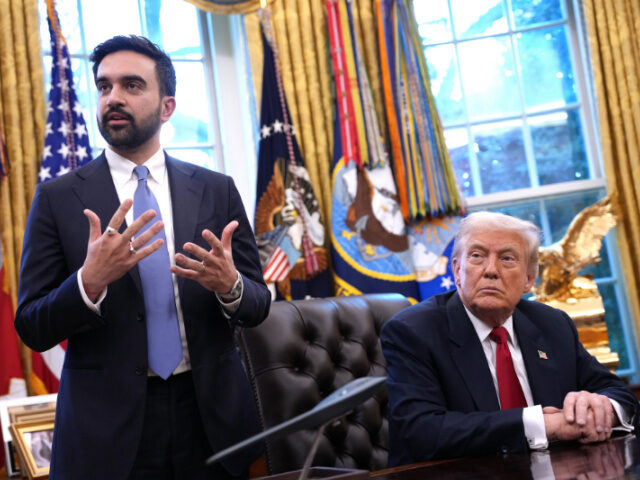
New York City Mayor Zohran Mamdani publicly objected to the U.S. military’s capture of Venezuela’s former leader Nicolás Maduro, outlining his concerns during remarks to a crowd following briefings from senior members of his administration. Mamdani said he had been informed that Maduro and his wife, Cilia Flores, were “captured and flown out of the country,” prompting him to contact President Donald Trump directly to communicate his position. His comments placed a local U.S. official into a broader international debate over the scope of American military authority, executive decision-making, and the handling of foreign leaders accused of serious crimes.

“I was briefed by my first deputy mayor, my chief of staff, my chief counsel, the police commissioner, as well as other members of my team,” Mamdani said. “I called the President and spoke with him directly to register my opposition to this act, and to make clear that it was an opposition based on being opposed to a pursuit of regime change, to the violation of federal international law, and a desire to see that be consistent each and every day.” Mamdani had previously described the operation as “unilaterally attacking a sovereign nation,” adding that such an action constituted “an act of war and a violation of federal and international law.”
President Trump announced the operation early Saturday, stating that U.S. forces had carried out a major action resulting in Maduro’s capture. “The United States of America has successfully carried out a large scale strike against Venezuela and its leader, President Nicolas Maduro, who has been, along with his wife, captured and flown out of the Country,” Trump said in a post on Truth Social. “This operation was done in conjunction with U.S. Law Enforcement.” U.S. officials have long accused Maduro of maintaining power through disputed elections, while American authorities have pursued criminal charges related to narcotics trafficking and weapons offenses.
Maduro is wanted by U.S. authorities on multiple narco-terrorism charges, and the United States has offered a $50 million reward for information leading to his arrest or conviction. The case has drawn attention to how criminal indictments against foreign leaders intersect with international law, U.S. jurisdiction, and national security policy, particularly when enforcement actions occur beyond U.S. borders.
According to ABC News, the aircraft believed to be carrying Maduro landed at Stewart Airport in Orange County, New York. “The aircraft believed to be carrying Nicolas Maduro has touched down at Stewart Airport in Orange County, New York, Saturday afternoon, sources familiar with the matter told ABC News.” The outlet added that Maduro was expected to be transported to New York City under federal supervision. “Maduro is now expected to take a helicopter to New York City, accompanied by the DEA. He will then head by motorcade to a location in New York City for processing before he’s held in jail, sources said.”
The developments have highlighted questions surrounding federal authority, the role of law enforcement agencies in high-profile international cases, and the impact of such actions on U.S. cities tasked with logistical and security responsibilities. Trump has stated that the United States would oversee Venezuela “until such time” as there can be a “safe, proper, and judicious transition,” placing additional focus on how U.S. foreign policy decisions can carry domestic legal, security, and governance implications.