
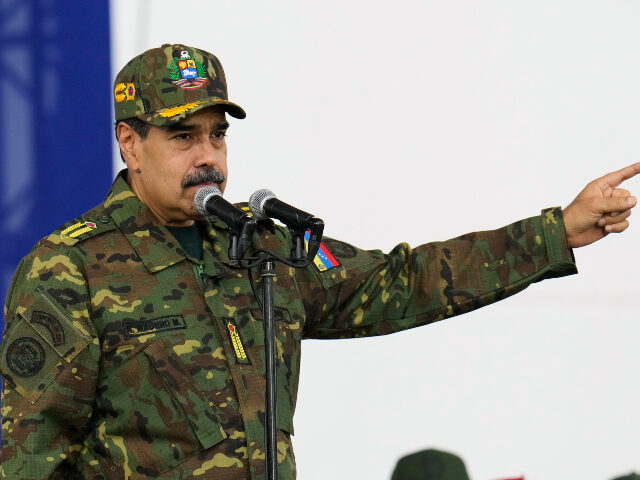
Demonstrations broke out in several U.S. cities after President Donald Trump announced that U.S. authorities had captured Venezuela’s longtime leader Nicolás Maduro and his wife, Cilia Flores. Protests were reported in New York City and Philadelphia, highlighting sharp divisions over U.S. involvement abroad, the scope of executive authority, and the use of military and law enforcement power beyond U.S. borders. The public reaction unfolded as federal officials detailed criminal charges against Maduro and outlined next steps in his processing within the United States.

Video footage posted to X showed protesters marching through New York City carrying signs that read, “Free Pres. Nicolás Maduro and Cilia Flores, Now!” and “No Blood For Oil.” According to ABC7NY, “a group of people demonstrated in Times Square” following the announcement of Maduro’s capture. Protesters there argued that the action was not “about drug trafficking or democracy,” but instead claimed it was “about stealing oil and dominating Latin America.” The outlet also reported that reactions within the Venezuelan-American community were mixed, noting that while some expressed relief or celebration, others voiced concern for relatives still living in Venezuela amid uncertainty about potential retaliation or unrest.
One Venezuelan woman, Marilla Moreira, who “fled Venezuela almost 30 years ago during the Chavez era,” told the outlet that she was “so happy.” Another resident, Kenia Fernandez, who moved to New York City “a year and a half ago,” said her mother remained fearful. “She told me not to send videos or anything to her in Venezuela because she’s afraid they’ll intercept her phone or social media,” Fernandez said. These accounts reflected broader concerns about surveillance, communications, and public safety in Venezuela during periods of political instability.
In Philadelphia, similar demonstrations were reported. WHYY.org stated that “more than 100 people” marched from Philadelphia City Hall to the U.S. Armed Forces recruitment center on Spring Garden Street, calling for Congress “to take back its power.” Protesters held signs reading, “No War on Venezuela,” and “End U.S. Imperialism,” according to the outlet. David Gibson, identified as one of the organizers, said Congress is “supposed to represent the people,” adding that citizens are supposed to be “the ones who are supposed to decide whether or not to go to war.” Another organizer, described as “a Venezuelan American and Philadelphia resident,” said the gathering reflected a shared belief in national sovereignty. “We’re all here because we agree that Venezuela should have sovereignty,” he said. “We’re here because we believe that Venezuela should be free from U.S. imperial aggression and violence.”
The protests followed President Trump’s announcement early Saturday. “The United States of America has successfully carried out a large scale strike against Venezuela and its leader, President Nicolas Maduro, who has been, along with his wife, captured and flown out of the Country,” Trump said in a post on Truth Social. “This operation was done in conjunction with U.S. Law Enforcement. Details to follow. There will be a News Conference today at 11 A.M., at Mar-a-Lago.” The statement placed the operation within a law enforcement framework while also signaling broader national security considerations.
Attorney General Pam Bondi later confirmed that Maduro and Flores had “been indicted in the Southern District of New York.” She said, “Nicolas Maduro has been charged with Narco-Terrorism Conspiracy, Cocaine Importation Conspiracy, Possession of Machineguns and Destructive Devices, and Conspiracy to Possess Machineguns and Destructive Devices against the United States.” The indictments and subsequent protests have underscored ongoing debates over accountability for foreign leaders, the reach of U.S. courts, and how international actions can quickly generate domestic political and civic responses.