
New York City Mayor Zohran Mamdani acknowledged this week that he does not hold federal security clearance, following public questions about a statement he made regarding developments involving Venezuelan President Nicolás Maduro. The clarification came after Mamdani said over the weekend that he had been “briefed” on events connected to Maduro, prompting inquiries about the source and nature of that information.

In a post on X, Mamdani wrote, “I was briefed this morning on the U.S. military capture of Venezuelan President Nicolás Maduro and his wife, as well as their planned imprisonment in federal custody here in New York City.” The statement quickly drew attention because briefings on military operations and federal custody typically involve classified or restricted information shared only with officials holding appropriate clearances.
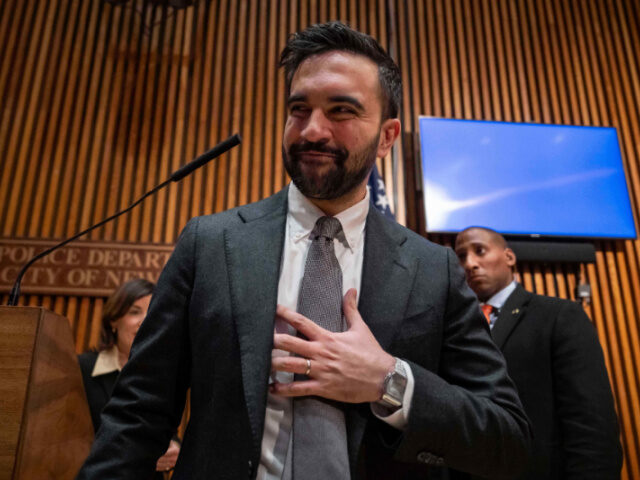
During a press briefing on Monday, a reporter asked Mamdani directly about his access to federal intelligence and whether any federal agency had initiated the vetting process required for a security clearance. “You don’t have federal security clearance yet, and has anyone from a federal agency reached out to you or members of your team to begin the vetting to get federal security clearance?” the reporter asked.
Mamdani responded by clarifying the nature of the briefing referenced in his earlier post. “That briefing, yes, was conducted by my team,” Mamdani said. “And the question of federal security clearance is one that’s on and on.” When pressed further — “So you do have it?” — Mamdani answered, “No, not as yet.”
The exchange highlighted the distinction between internal briefings conducted by a mayor’s staff and formal briefings provided by federal agencies. Federal security clearances are required for access to classified national security information and are typically granted after a background investigation and formal approval process. Local officials do not automatically receive such clearance, even when developments may have national or international implications.
Mamdani’s original statement referenced the reported capture of Maduro and his wife by U.S. forces, a claim that has been described publicly but has not been accompanied by official documentation released through standard federal channels. Maduro has long been the subject of U.S. criminal charges, including allegations related to narco-terrorism. In 2020, U.S. courts accused Maduro of being a leading figure in the Cartel of the Suns, an international cocaine trafficking operation alleged to involve senior members of the Venezuelan government and aimed at moving narcotics into the United States.
The situation underscores how rapidly evolving international developments, combined with social media communication, can raise questions about information sources, verification, and the boundaries between local governance and federal national security responsibilities. It also illustrates how statements by local officials can prompt scrutiny when they touch on military actions, federal custody, or matters typically handled at the national level.