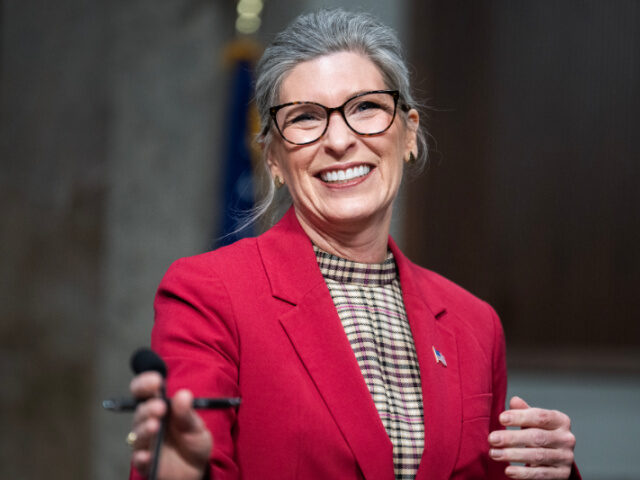
The discovery of large-scale fraud cases in Minnesota has renewed attention in Washington on efforts to reduce government waste, fraud, and abuse, according to comments made this week by Sen. Joni Ernst (R-IA). Speaking on the Alex Marlow Show, Ernst said the developments have brought new momentum to the work of the Senate DOGE Caucus, which focuses on oversight and efficiency in federal spending.

Ernst told host Alex Marlow that Senate Majority Leader John Thune (R-SD) has asked her, in her role as Senate DOGE Caucus Chairwoman, to assemble a legislative package that can advance through the Senate. “Now that we’ve seen what’s going on in Minnesota with the Somali population there and the massive amounts of fraud through federal government programs, people are becoming excited about it again,” she told Marlow. Her comments referenced widely reported fraud investigations in the state involving misuse of public funds, cases that have drawn national attention and prompted renewed scrutiny of how federal programs are administered and monitored.
Reports of fraud in Minnesota, including cases tied to federally funded programs, have fueled broader questions about oversight mechanisms and accountability at the state and federal levels. Some of these investigations have involved organizations that received public funds but were later accused of misrepresenting services provided. Ernst said these revelations have helped accelerate legislative discussions focused on closing gaps in existing programs. “We’ve got more steam behind us because we have seen the exposing of these learning centers that actually had no children enrolled at them,” Ernst said Wednesday, noting that the caucus was meeting later that day to refine an existing legislative plan for Thune’s review.
According to Ernst, the goal is to consolidate reforms into a comprehensive proposal. “It’s government efficiency, it’s closing loopholes, it’s exposing fraud. I mean, there are so many different ways we can get at this, but we want one big package that we can move through the Senate and then hopefully the house and get it to the President’s desk for signature,” she said. The approach reflects ongoing concerns about the scale of federal spending and the challenges of ensuring funds are used as intended.
Ernst also pointed to pandemic-era relief programs as areas of focus. While much of the alleged fraud predates COVID-19, legislation passed in 2020 significantly expanded federal spending, creating opportunities for abuse, according to oversight reports and law enforcement actions. Ernst said she plans to examine programs such as the Paycheck Protection Program and the Economic Injury Disaster Loan program. “We saw rampant fraud there, where people were actually using when they had to submit their paperwork, their photo IDs, they actually had photos of Barbie dolls as the ID,” she revealed.
Although Ernst said she prefers advancing a single, comprehensive bill, she acknowledged that elements of the package could be incorporated into other legislation, including appropriations measures. “We can either bring this up on the floor as an entire package, which is what the Leader would like to do, or we use it as a pool for amendments as we’re moving other bills on the floor, especially as we’re working on appropriations and so forth,” she explained. “So there’s a number of opportunities that we have with this.”
Ernst said she does not expect broad support from Senate Democrats. “I think there are some reasonable members, but basically it will be cutting off again that, you know, constant flow of money that they’ve used to purchase votes through the years,” she told Marlow. She added that the attention surrounding the Minnesota fraud cases has heightened the political stakes. “The attention that the Minnesota fraud scandal has gotten has really given us legs once again. So it will put some of them in a very difficult position, but it’s absolutely necessary to do this.”