
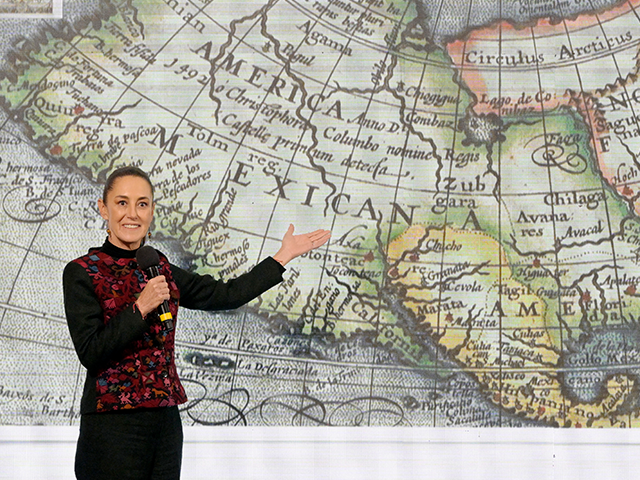
A new book by investigative journalist Peter Schweizer examines claims that Mexico’s consulates across the United States have engaged in coordinated activities intended to influence American political outcomes in ways aligned with Mexican government interests. In The Invisible Coup: How American Elites and Foreign Powers Use Immigration as a Weapon, Schweizer writes that Mexico’s diplomatic network inside the U.S. has operated beyond traditional consular services, describing what he characterizes as a long-running effort to mobilize migrants—both legal and illegal—into a political force.

According to the book, Mexico currently operates more than 50 consulates throughout the United States. Schweizer writes that the Mexican government “is blatantly interfering in our domestic politics, working with American political advisors to turn legal and illegal migrants inside the US into a political force to wield for their benefit.” He frames these activities as part of a broader strategy that uses immigration-related issues to shape political debates and electoral outcomes inside the U.S.
Schweizer points to education initiatives as one element of this strategy, writing that Mexico sends roughly one million textbooks each year to American schools. These materials, he says, present Mexico’s version of U.S. history and other subjects. He also writes that Mexican consulates offer courses for Mexican-American adults living in the United States, which he argues are not designed to promote assimilation into American civic life but instead reinforce political engagement tied to Mexican national interests.
The book places particular emphasis on large-scale protests that Schweizer writes were supported or encouraged by Mexico’s consular network. He describes demonstrations during the spring of 2007, when hundreds of thousands of protesters marched in cities across the country in opposition to proposed immigration enforcement measures. Schweizer writes:
“Mexico, working with its domestic allies, has staged successful mass protests. During the spring of 2007, hundreds of thousands of protestors took to the streets across America in multiple marches to defend illegal immigrants. They blocked roads, carrying Mexican, Salvadoran, Guatemalan, or Dominican flags. The chants reflected a presumption of the right to become citizens regardless of their host country’s laws. ‘Today we march, tomorrow we vote’ and ‘We didn’t cross the border; the border crossed us.’ An astonishing 3.5 million to 5 million people participated in the marches in twenty cities over a couple of months.107 While many Americans were shocked by the political display, radicals noted with pleasure ‘the highly organized protest against the exclusionary model of citizenship. It worked: the bill raising illegal immigration to a felony died in the Senate.’”
Schweizer also cites contemporaneous media coverage to illustrate how the demonstrations were perceived outside the United States. At a large Los Angeles protest, the Associated Press reported that Mexican television reporter Alberto Tinoco described the scene to viewers in Mexico by saying: “With all due respect to Uncle Sam, this shows that Los Angeles has never stopped being ours.”
The book further details actions by former Mexican President Andrés Manuel López Obrador, known as AMLO, during the early months of President Donald Trump’s first term. Schweizer writes that AMLO traveled to American cities in February 2017 to rally Mexican migrants against Trump’s border enforcement policies, which had restricted illegal immigration and disrupted drug cartel operations. According to Schweizer, AMLO went so far as to suggest converting Mexico’s U.S. consulates into migrant defense offices, an idea he describes as an unprecedented effort by a foreign leader to directly influence American domestic policy debates.
“AMLO was not simply aiding migrants in their legal battles in the United States; he was calling for and working toward an electoral change inside the US,” Schweizer writes. “A foreign leader so brazenly interfering in American politics was unprecedented, at least from a country with which the United States was not at war.”
Schweizer’s book places these developments within a broader discussion of how immigration policy intersects with national sovereignty, diplomatic norms, and electoral integrity. By detailing the scope and scale of consular activity described in the book, the author argues that immigration has increasingly become a channel through which foreign governments attempt to shape political outcomes beyond their borders.