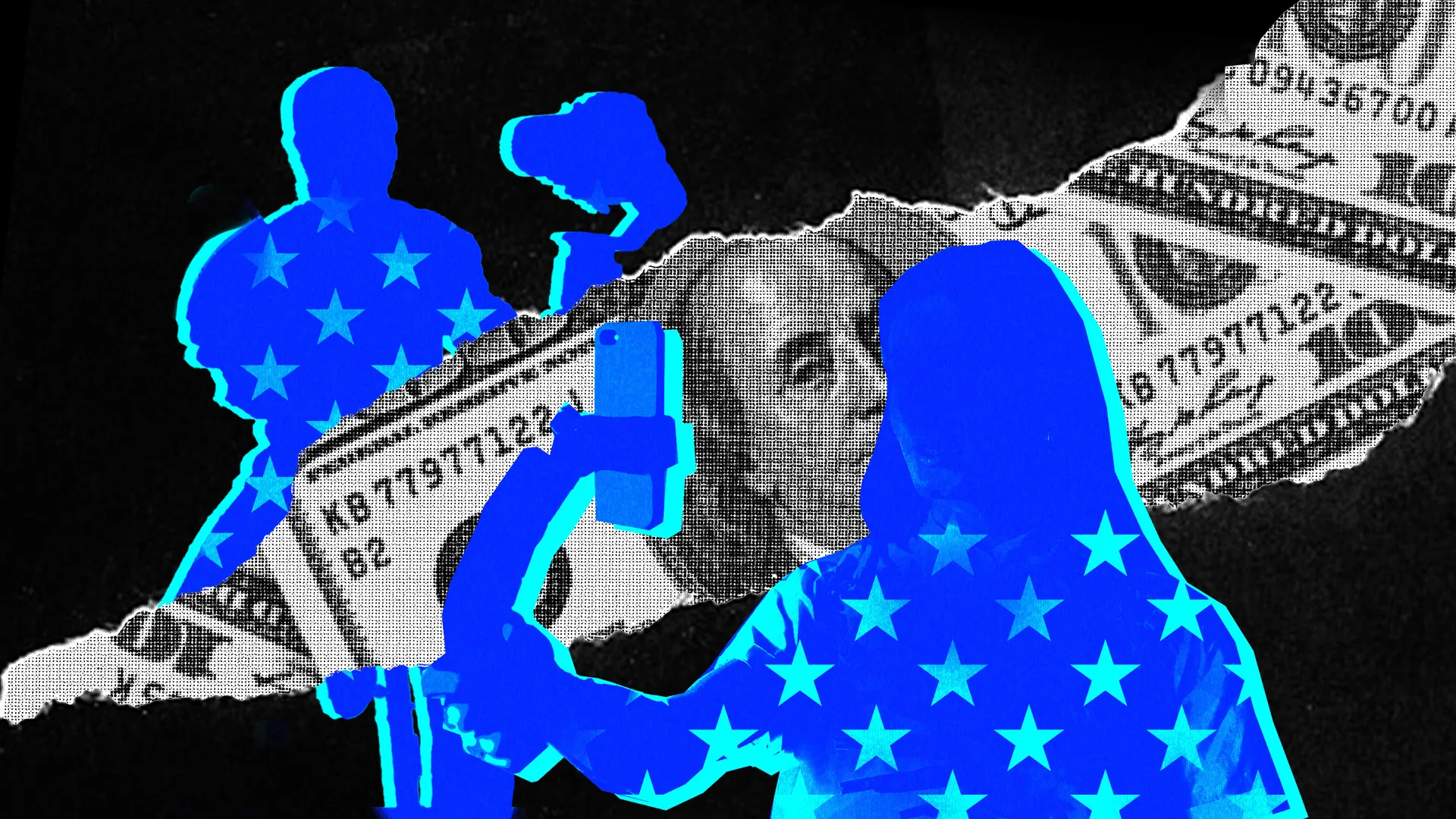
Democrats may have lost big in 2024, but instead of rethinking their message, they’re quietly rewriting the playbook. This time, they’re trying to buy influence where it counts most: online.

In a private group chat, dozens of left-leaning influencers were offered up to $8,000 a month through a new program called the Chorus Creator Incubator. The catch? These influencers had to sign contracts filled with secrecy clauses—barring them from disclosing the payments, restricting their political content, and even forcing them to funnel meetings with lawmakers through the program’s handlers. One creator who reviewed the deal called it a “take it or leave it” offer.
The money behind this operation comes from the Sixteen Thirty Fund, one of the largest liberal dark money groups in America. This fund has poured hundreds of millions into progressive causes, abortion ballot measures, and campaigns to oust Republicans from office. Its donors remain largely hidden, with just four mega-donors bankrolling nearly two-thirds of its recent revenue. The group itself admits it benefits from being housed in a nonprofit: “It avoids a lot of the public disclosure or public disclaimers—you know, ‘Paid for by blah blah blah blah’—that you see on political ads. We don’t need to deal with any of that,” said Graham Wilson, a lawyer for Chorus, in a Zoom call with creators.
That statement alone should raise red flags. Instead of transparency, Democrats are leaning on shadowy funding structures that keep voters in the dark about who is paying for political content. Contracts viewed by WIRED showed influencers were banned from publicly acknowledging their ties to Chorus or The Sixteen Thirty Fund. They were also barred from using program money to support or oppose candidates without express approval from Chorus. In other words, every word had to fit the party line.
For years, Democrats have struggled to connect with younger voters online. The Biden White House even alienated content creators who criticized its policies on climate, Gaza, or the TikTok ban. Now, the Left’s answer is to manufacture influence—paying off creators and demanding loyalty under gag orders.
Meanwhile, Republicans have spent decades building a decentralized, independent media network—one that thrives on free expression rather than top-down control. It’s messy at times, but it reflects real voices, not hidden scripts. The Left, by contrast, is trying to centralize online speech under the thumb of a nonprofit dark money giant.
Even some left-wing creators are uneasy. Content creator Keith Edwards called the structure “predatory.” Others bristled at clauses banning them from criticizing fellow Chorus members or questioned why Democrats wouldn’t just support influencers openly instead of through shadowy middlemen.
The Sixteen Thirty Fund boasts of backing causes like “economic equity” and “climate solutions.” But tax records tell a different story: more than $400 million in 2020 alone to fuel campaigns against Trump and Senate Republicans, and nearly $200 million in 2022 to bankroll abortion initiatives. Their real priority is raw political power—and Chorus is simply their latest vehicle.
What does this mean for voters? It means the Left is working overtime to manipulate the digital town square. While conservatives push for transparency, accountability, and free expression, Democrats are leaning on secret contracts, billionaire cash, and influencers told to toe the line—or lose their paychecks.
It’s another reminder: when the Left talks about “saving democracy,” what they often mean is controlling the conversation.