

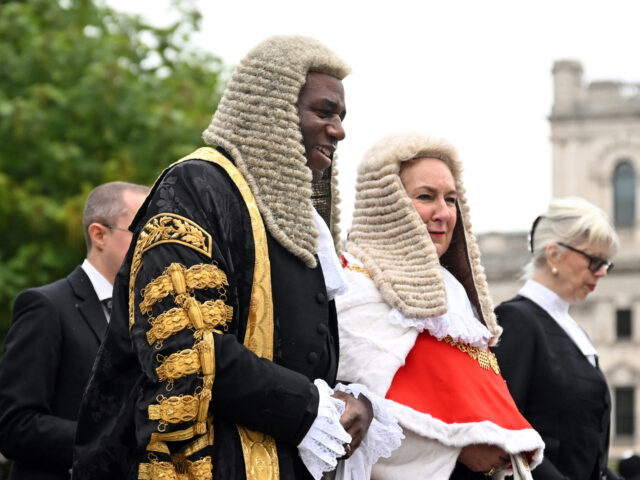
The tension between government power and individual liberty is reaching a breaking point in the United Kingdom, where the Labour government is moving to strip away one of the oldest safeguards against state overreach: the right to trial by jury. For centuries, juries have served as a barrier between citizens and the government—ensuring that the law reflects the values of the people, not the preferences of political leaders or career judges. Now, Justice Secretary David Lammy is reportedly preparing to replace that system with something far more centralized, and far easier for the state to control.

The Free Speech Union (FSU) sounded the alarm, warning that freedom itself is on the line. The group stated that the United Kingdom risks losing “a check on governmental power and arbitrary justice” in “the biggest assault on our liberties in 800 years” if the government succeeds in abolishing jury trials for all but the most serious crimes. Under Lammy’s plan, murder, rape, terrorism, and a handful of major offenses would still go before juries. But for many other cases—cases that can carry significant prison time—ordinary citizens could find themselves judged solely by the state, without the protection of peer review. The FSU argues that free-speech cases, which already attract aggressive policing, would be especially vulnerable under such a system.
Legal data cited by the FSU and published in The Daily Telegraph show why. According to the Union, “legal studies had found defendants in free speech cases are twice as likely to be acquitted by a jury than those who had sat in a court without.” Their statement emphasized that “according to legal studies, jury trials provide a more balanced outcome, with higher acquittal rates in cases that might otherwise be influenced heavily by prosecutorial bias. Moreover, juries often bring diverse perspectives which lead to fairer judgments compared to decisions by a single judge who might have biases.” This is the core issue: when speech becomes criminalized, even subtly, the safeguard of a jury becomes the last line of defense against the state policing dissent.
Lord Toby Young, founder of the FSU, reinforced the warning, stating: “Trial by jury is a bulwark of British liberty and if people charged with speech offences are denied that right, they’re more likely to be convicted”. The numbers back him up. Over the past decade, only 16 percent of defendants invoking freedom of speech as a defense were acquitted in magistrates’ courts, where judges both hear the evidence and deliver the verdict. In Crown Courts—where ordinary citizens act as jurors—28 percent were cleared. And the most recent data is even more striking: in the past twelve months, juries acquitted defendants claiming not-guilty to speech-related charges 75 percent of the time. That surge coincides with an aggressive rise in prosecutions tied to so-called “hate speech,” political expression, and online posts.
The FSU stressed the danger of eliminating juries: “trial by jury has been an instrumental part of our judicial system, ensuring that ordinary citizens participate in legal processes and decisions, bringing community standards to the justice system… The jury system acts as a check on governmental power and arbitrary justice. It symbolizes transparency and accountability in ensuring fair outcomes. Without it, the legal process becomes more centralized, potentially giving unfair advantage to the state over individuals. …Cutting jury trials will undermine free speech. The Deputy Prime Minister’s plans are the biggest assault on our liberties in 800 years.”
Lammy is expected to tell Parliament that the changes are necessary to address a massive backlog of more than 80,000 cases, with delays for serious crimes stretching years into the future. That backlog is a problem—but it’s also a problem government created. Years of underfunding the justice system, expanding case complexity, administrative inefficiencies, and the cost of prolonged Covid lockdowns—all decisions made by elected leaders—pushed the system to its limit. Instead of strengthening the courts, expanding capacity, or restoring accountability, Lammy appears determined to lower the standard of justice itself.
That approach has sparked heavy pushback, and it may face resistance in both the House of Lords and the House of Commons. Critics argue that sacrificing the protections of jury trials to solve administrative failures is a dangerous shortcut. Over the weekend, Lammy reportedly defended his position by claiming he had “no choice” but to move forward, especially in the interest of rape victims waiting years for trial. Opponents counter that the government should fix the system—not erode foundational liberties.
The strongest objections are coming from the right, where concerns about government centralization and unchecked judicial power run deep. Reform UK leader Nigel Farage called jury trials a centuries-old safeguard and warned that eliminating them from the vast majority of cases “will give our politicised judiciary far too much power.” Farage added bluntly: “This Labour government is crushing our freedom”.
Conservative Party shadow justice minister Robert Jenrick highlighted the cultural and democratic role juries play. He said: “Juries act as a safety valve within the justice system. They pool the collective wisdom of 12 citizens and ensure that the law does not stray too far from the values of the people it serves. Instead of depriving British citizens of ancient liberties, David Lammy should get his own department in order. The right to be tried by our peers has existed for more than 800 years – it is not to be casually discarded forever when the spreadsheets turn red.”
At its core, this fight isn’t about efficiency. It’s about whether a free people allow their government to weaken the most important barrier between citizens and state power. Once rights this old are discarded for convenience, they rarely return.








I can’t believe it! Sorry, we’re not accepting any immigrants at this time. It’s political suicide! People have a right to defend themselves, everywhere! Even the Bible says God is the judge, so where do they get off playing God? This is a law that should never be changed! The right to a jury of their peers! Sadly, the case of MN fraud was turned over by the judge, when the jury found him guilty. This is not going over well here at all!! Think about how a whole country would react to wrongful mis Justice? Suicidal!!