
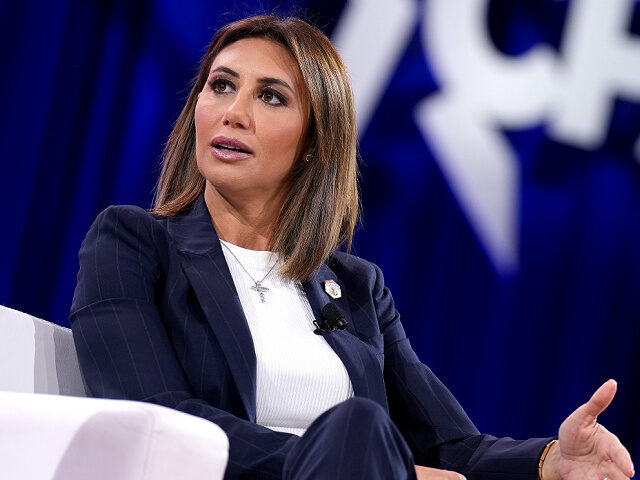
The Biden-era Justice Department is making waves again—and not in a good way. In a stunning display of judicial overreach and backroom politics, the DOJ abruptly fired the acting U.S. Attorney for the District of New Jersey, Alina Habba’s chosen deputy, just hours after a closed-door vote by district judges pushed Habba out of her position.

Attorney General Pam Bondi didn’t mince words. Posting on X, she praised Habba—a Jersey-born prosecutor tapped by President Trump—as someone who’s “been doing a great job” cleaning up crime and bringing law and order back to the state. But that wasn’t enough for the entrenched legal establishment.
“Politically minded judges refused” to let Habba continue, Bondi revealed, even though her interim term was just days from completion. Instead, they moved to install her deputy, Desiree Grace—someone Habba had trusted as her first assistant—as her replacement. Bondi wasn’t having it: “This Department of Justice does not tolerate rogue judges — especially when they threaten the President’s core Article II powers.”
It’s the latest chapter in a disturbing pattern: bureaucratic insiders attempting to override executive authority with little accountability. Grace may carry a Republican label, but as with many institutional players, it seems the allegiance is to the system—not to reform, not to accountability, and certainly not to President Trump’s mandate for change.
Desiree Grace had been serving as chief of the criminal division and worked as a federal prosecutor since 2016—deep within the same justice bureaucracy that Trump has repeatedly vowed to clean up. And while she may have worn the title of “first assistant,” her swift elevation by the judiciary—right before the Senate could act on Habba’s formal nomination—raises questions few in the mainstream media are willing to ask.
Deputy Attorney General Todd Blanche was blunt in his assessment: “The district judges in New Jersey had proved this was never about law, but about politics.” He continued, “They forced out President Trump’s pick, @UsAttyHabba, then installed her deputy, colluding with the NJ Senators along the way. It won’t work.” Blanche confirmed that Grace had been “removed, effective immediately.”
That’s a move grounded in constitutional authority. Under Article II, the President—not a clique of unelected judges or partisan Senators—holds the power to direct the executive branch. And while Bondi and the DOJ leadership are making clear they won’t tolerate these judicial power plays, the timing of this maneuver reveals something deeper: a resistance within the system to conservative, tough-on-crime reformers.
Recall: President Trump named Habba to the New Jersey post in March after reassigning John Giordano, who was nominated to serve as U.S. ambassador to Namibia. Habba, born to an Iraqi family, quickly made waves for prioritizing law enforcement and restoring basic order. Just weeks ago, Trump nominated her for a full four-year term.
Yet even before her nomination could reach the Senate floor, Democrat Senators Cory Booker and Andy Kim made it clear they would not support her. Unsurprisingly, the Senate—dragging its heels as usual—still hasn’t acted on her confirmation. That left the door open for the judiciary to step in.
And step in they did.
This isn’t just about New Jersey. It’s a warning to every conservative reformer who dares challenge the D.C. swamp from within: the system protects its own. Whether it’s unelected judges or Senate gatekeepers, the message is clear—any Trump-aligned appointee pushing for accountability and real results will be met with resistance at every turn.
But there’s another message being sent—loud and clear—from Bondi, Blanche, and the Trump DOJ: we’re not backing down. The President’s authority matters. Law and order matters. And political games won’t stand in the way of restoring justice where it’s long been absent.