
Federal authorities and policy groups are responding to the fatal shooting of a National Guard member and the wounding of another in Washington, DC, with renewed attention on U.S. immigration screening and enforcement procedures. The case centers on Rahmanullah Lakanwal, a 29-year-old Afghan national who entered the United States in 2021 through Operation Allies Welcome after previously working with a CIA-backed partner force in Kandahar. Lakanwal has been arraigned on charges related to the Thanksgiving-week ambush-style attack that killed 20-year-old Spc. Sarah Beckstrom and critically injured 24-year-old Staff Sgt. Andrew Wolfe.

In the immediate aftermath, U.S. immigration authorities announced an indefinite pause on immigration processing for Afghan nationals and initiated a broader reexamination of immigration, asylum, and green card applications from 19 countries, including Afghanistan, Iran, Venezuela, Sudan, Haiti, Cuba, and Laos. Officials have not publicly detailed how long the review will last or what specific criteria will be reassessed, but the action represents one of the most sweeping immigration processing pauses in recent years.
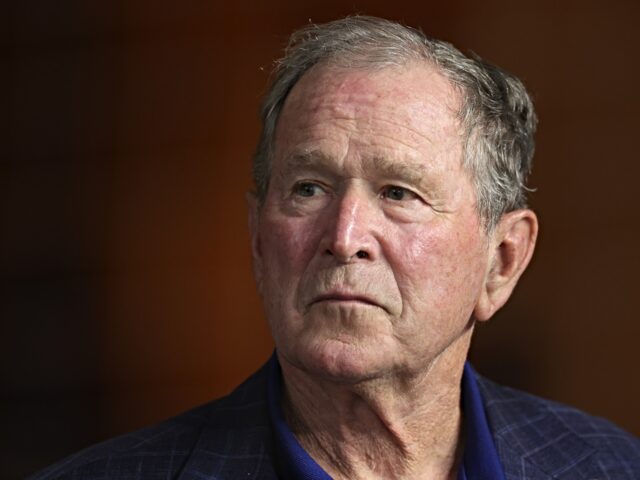
The George W. Bush Institute responded by cautioning against broadly targeting Afghan applicants based on the actions of a single individual. In a post on X, the institute stated: “The actions of a man charged with a heinous crime have derailed the lawful U.S. immigration applications of people from 18 countries so far, including Afghanistan. Afghans are facing uncertainty at home and in the U.S. Read why we can’t turn our back on Afghans and other immigrants due to one man’s crime: ” The post linked to a policy article authored by institute directors Natalie Gonnella-Platts and Laura Collins.
That article begins by condemning the shooting as “unconscionable,” describing it as an act of terrorism, hate, and barbaric violence that “has no place in any civilized society.” The authors argue that the current response has affected Afghans who worked alongside U.S. forces over two decades of military operations and who, they write, underwent years of vetting before being admitted. “Going back on our word to Afghans who helped us is contrary to our values as Americans,” they write, adding that paused visa issuance, halted asylum decisions, and canceled naturalization ceremonies have created uncertainty for applicants already living in the United States.
They further explain, “Asylum seekers may continue to have court hearings, but they won’t receive a determination on their cases,” and urge policymakers to focus on identifying any failures that allowed the attack to occur. “What, if anything, could have been done to prevent this tragedy,” they ask, while emphasizing that “The suspect will be held accountable for his crimes,” and that “this man is responsible for his actions, not all foreign-born people.” They conclude, “The innocent shouldn’t bear the burden of someone else’s crimes.”
The institute’s article also outlines conditions in Afghanistan under Taliban rule, describing widespread restrictions on women and ongoing political repression. The authors contend that many Afghans displaced by the regime have been forced to flee more than once and continue to oppose extremism from abroad. They frame continued consideration of Afghan immigration cases as consistent with longstanding U.S. practices, writing that “one of America’s unique strengths is how often in our history we have been a refuge for the poor and oppressed,” while acknowledging that immigration policy has “long warranted improvement” and that vetting procedures should be reviewed without imposing blanket penalties on lawful applicants.
The Bush Institute’s position drew a public response from Stephen Miller, Deputy Chief of Staff for Policy and Homeland Security Advisor for President Trump. Posting on X, Miller wrote: “As Americans get ready to celebrate Christmas, the George W. Bush Presidential Center is very earnestly posting about the urgent need for unfettered migration from the most dangerous nations on planet earth, while effectively conceding some of these migrants will try to kill us.” Miller has previously argued that immigration policy must account for broader national impacts rather than individual cases alone. “You are not just importing individuals. You are importing societies,” he wrote shortly after the shooting. “No magic transformation occurs when failed states cross borders.” He described this perspective as central to what he called “the great lie of mass migration,” warning that migrants and their descendants can, at scale, “recreate the conditions, and terrors, of their broken homelands.”
The debate highlights ongoing tensions between security reviews, immigration vetting systems, and commitments made during military withdrawals. As federal agencies continue their review, the case has renewed attention on how immigration decisions intersect with public safety, government accountability, and the long-term implications of emergency policy responses following violent crimes.