

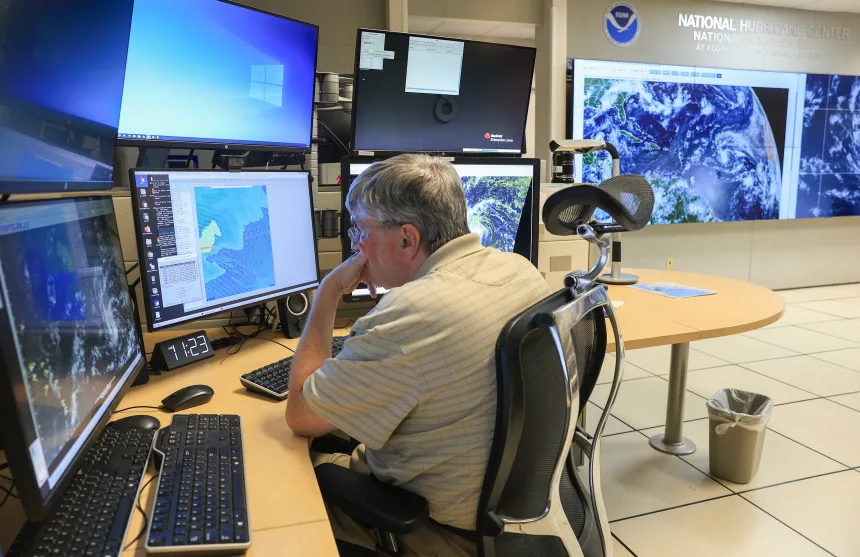
Hurricane Erin has quickly become one of the most powerful storms of the 2025 Atlantic season, with the National Hurricane Center reporting late Sunday that the system had regained Category 4 strength. Sustained winds reached 130 mph, with tropical-storm-force winds extending 230 miles outward. The storm’s center sat just under a thousand miles southeast of Cape Hatteras, North Carolina.

What makes Erin stand out is not just its size and strength, but the astonishing pace at which it intensified. On Friday morning, Erin was a Category 1 hurricane with 75 mph winds. By Saturday afternoon, it had exploded into a rare Category 5 storm, briefly topping 160 mph before leveling off. In just over 24 hours, the storm joined the ranks of the fastest-strengthening hurricanes ever recorded in the Atlantic basin — a reminder that when nature turns violent, it can move faster than bureaucracies or emergency planners can react.
For perspective, Erin is now only the 43rd Category 5 storm in Atlantic history. That may sound rare, but the fact that 11 of those storms have come since 2016 shows how recent hurricane seasons have been stacked with extreme events. This is the fourth consecutive year the Atlantic has produced at least one Category 5 storm, and the season is still young.
Erin’s projected path is expected to keep it offshore, curving north and then northeast between the U.S. East Coast and Bermuda. That’s good news for avoiding a direct landfall, but it doesn’t mean Americans are out of danger. Large storms have a way of stretching their reach far beyond the eye, and forecasters are already warning that rip currents will be a threat along Southern beaches starting Monday, with those risks moving north along the East Coast later in the week.
Cassandra Mora, a meteorologist at the Hurricane Center, explained the danger clearly: “When assessing how people in the US lost their lives from the last 10 years due to tropical storms and hurricanes about 12% of them were due to rip currents.” That’s not the headline risk most people think of when they hear “hurricane,” but it is a serious one. The Weather Service is urging beachgoers not to rely on the size of visible waves to judge whether it’s safe to swim.
Local governments are taking precautions. Dare County, North Carolina, which includes the Outer Banks, issued a state of emergency on Sunday with a mandatory evacuation order for Hatteras Island. Officials warned: “Coastal flooding and ocean overwash are expected to begin as early as Tuesday, August 19, 2025 and continue through Thursday, August 21, 2025. Portions of N.C. Highway 12 on Hatteras Island will likely be impassable for several days.”
Meanwhile, Erin’s outer bands continue to pound Puerto Rico with heavy rain. The island has already seen widespread flooding and power outages, with Governor Jennifer González-Colón reporting 100,000 customers without electricity. Additional rainfall of 2 to 4 inches is expected through Monday, while up to 6 inches could fall across the Turks and Caicos and the eastern Bahamas, bringing the risk of flash floods and landslides. Tropical storm warnings are active in those regions.
While some insist on tying every storm to sweeping debates about climate policy, the immediate reality is that communities on the ground face the brunt of nature’s extremes — whether or not Washington’s climate bureaucracy manages to spend billions in taxpayer dollars chasing long-term projections. Hurricanes have always been part of life in the Atlantic, and the lessons have always been the same: preparation saves lives, local response matters, and federal red tape often lags behind the urgency of the moment.
Erin, as the first major hurricane of 2025, is a sobering reminder that we are entering the peak stretch of hurricane season. The tropics historically roar to life from mid-August to mid-October, and forecasters are already predicting above-average activity this year. The storm’s rapid growth underscores why vigilance matters — not just from forecasters and first responders, but from citizens who take preparedness seriously.
Even though Erin may stay out at sea, its reach is proof that no coastal community can take the season lightly. The hurricane doesn’t need to make landfall to disrupt lives, strain local economies, and stretch emergency resources thin. For those living along America’s coasts, common-sense preparation now can make the difference when the next storm does not veer safely away.