

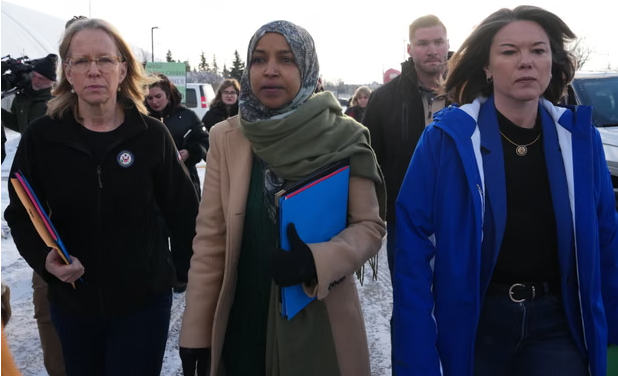
On Monday’s broadcast of CNN’s “OutFront,” Rep. Ilhan Omar (D-MN) sharply criticized the circumstances surrounding a fatal shooting involving an Immigration and Customs Enforcement (ICE) agent during a protest in Minneapolis, describing the incident as a “clear murder.” Her comments came amid an ongoing public dispute between members of Congress and the White House over how the events unfolded, and over the interpretation of video evidence released in the aftermath.

Host Erin Burnett referenced the administration’s response to Omar’s earlier remarks, noting that the White House had pushed back through a statement provided to The Hill. Burnett said, “You spoke out, obviously, against the administration’s version of events and the Good shooting. And the White House came out after you did that. And they’ve told The Hill. I just wanted to quote for you, this is just a response to what you said yesterday, that ‘Videos have debunked Ilhan Omar as lies. The Ice officer was clearly struck by Good’s car. Omar should acknowledge the truth rather than lie about law enforcement and incite more violence against them.’ What is your response to them? And I guess as part of this, if it turns out that the car Good’s car did bump the the agent, right. If that happened, does that change anything about how you see things and, and the fact that this still shouldn’t have happened?”
Omar rejected the administration’s characterization of the incident and disputed the claim that the ICE officer was struck by the vehicle prior to the shooting. She responded, “I mean, it is, the most BS statement again, that the administration, can put out. You see this officer clearly go in front of, the car as she reverses. You see his hands, on the car, you see, his feet is very far away from the wheels of the car. So there was no possibility, that he might have been afraid, of getting, hit by the car. And so it is a clear PR, it’s a defense, of a clear murder, that we see on TV, by the administration. And it is shameful, and it should not be acceptable is unconscionable. And I stand by everything that I’ve said.”
The exchange highlighted broader tensions surrounding federal law enforcement operations, the use of force during protests, and the role of public officials in characterizing ongoing or disputed incidents. ICE, as a federal agency, operates under national enforcement mandates, and encounters involving its officers often raise questions about accountability, agency protocols, and the legal standards governing use of deadly force. In cases involving video evidence, interpretations can vary depending on perspective, timing, and context, particularly while investigations or reviews are still underway.
Burnett pressed Omar further on her choice of language, asking, “Are you comfortable, though, with the word murder?” Omar replied, “I am very comfortable with the word murder. There is no conscience way in which you watch the video that the administration itself has produced. And you do not see this person, this officer, Jonathan Ross, clearly murdering this woman. Not only does he shoot her in the face, but you see two more shots being fired on the side of the driver’s window. There is no way to explain this outside of it being a clearly thought out murder, an execution of this woman.”
The public disagreement underscores how rapidly high-profile incidents involving law enforcement can move from the scene to national political debate. Statements made by elected officials, responses issued by the executive branch, and footage released to the public all contribute to shaping understanding before formal investigative findings are complete. For communities, federal agencies, and policymakers alike, the outcome of such cases often carries implications for public trust, protest policing, and the balance between enforcing the law and protecting individual rights.






Vile racist liar…