
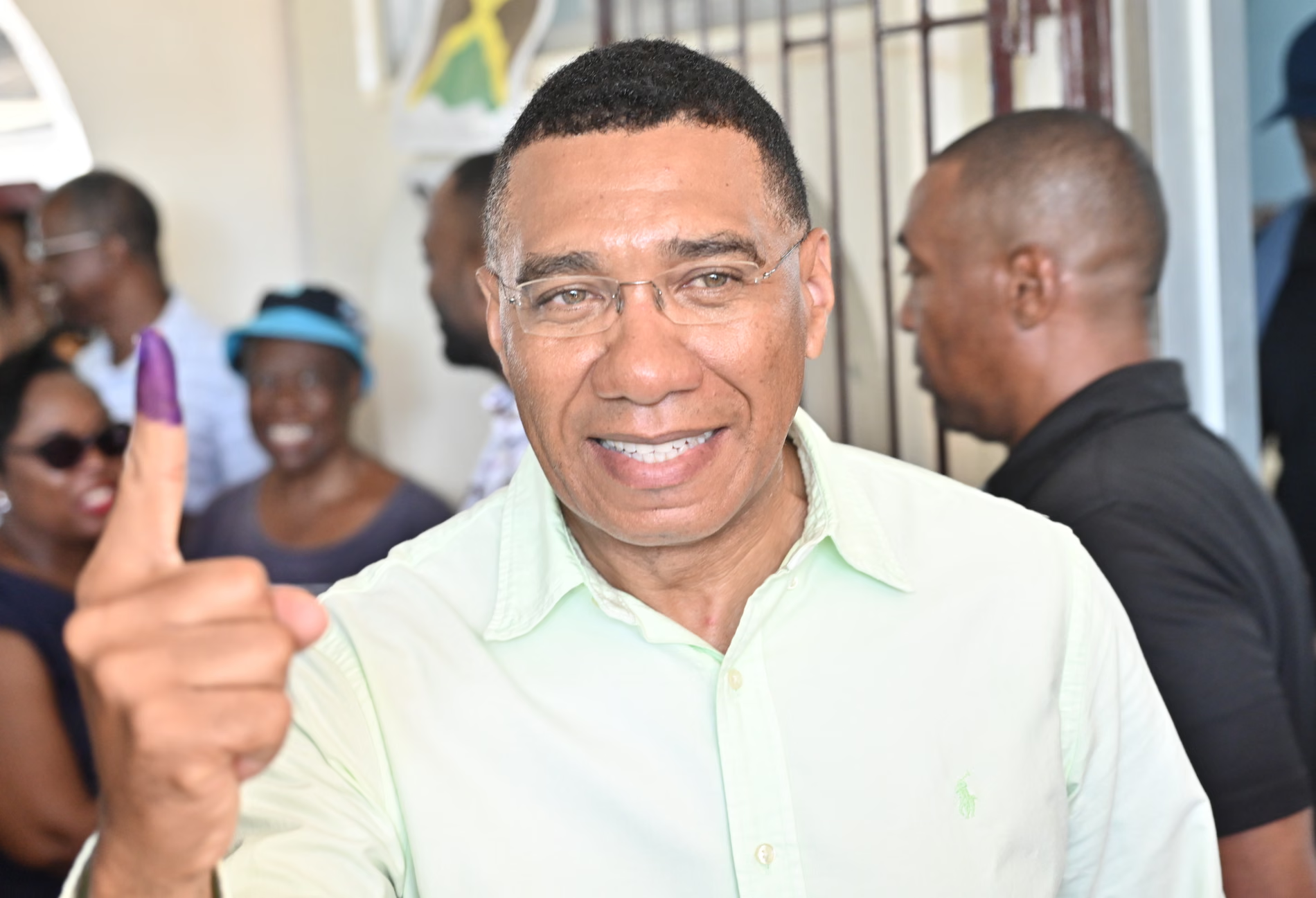
Jamaica has chosen continuity over chaos, handing Prime Minister Andrew Holness and the Jamaica Labour Party (JLP) a third straight term in government. After a fiercely contested race with the opposition People’s National Party (PNP), preliminary results showed the JLP securing 34 seats against the PNP’s 29.

In his victory speech, Holness reminded voters that consistency and momentum matter more than political experiments. “In our second term we created a momentum. We are on the right path, heading in the right direction with the right trajectory. That should not be broken and the Jamaican people share that view and therefore we will continue to use the momentum to accelerate the development of our country.”
The JLP’s case to voters was simple but powerful: results. Under Holness’s leadership, Jamaica has made real strides in both public safety and fiscal responsibility. Once drowning in debt that ballooned to 140% of GDP in 2013, Jamaica has since cut that burden nearly in half—down to 73.4% in the 2023-24 financial year. The World Bank has credited the reforms, and the economy is projected to grow by 1.7% this year.
Just as importantly, Jamaicans are beginning to see safer streets. Killings have dropped 43% this year alone, the steepest decline in decades. Stronger law enforcement, more firearm seizures, and a security-first approach have delivered what decades of soft policies could not: meaningful progress in restoring order.
The campaign was not without its attacks. The opposition seized on allegations raised by Jamaica’s integrity commission regarding Holness’s income and assets. But Holness flatly denied wrongdoing, pointing out that he had already undergone a yearlong forensic audit that found no corruption and no charges filed. “Every aspect of my report, every aspect of my personal life and my personal financial details are in the public domain,” Holness said. He has challenged the integrity commission’s report in court, branding it “unlawful and unfair.”
Holness also defended the way his party ran the race: “Make no mistake about it, this was not victory by default. Make no mistake about it, this was not an easy victory. Make no mistake about it, this was a fight. But, my political organisation, we did not descend to the gutter to fight,” he said, adding that the JLP “proved that we can run a decent campaign and win.”
PNP leader Mark Golding conceded with grace, telling supporters: “It’s my duty as a believer in democracy to acknowledge and concede the result and to congratulate our opponents, the Jamaica Labour party, for their victory tonight. Jamaica’s democracy is important and we must cherish it.”
Still, a major concern lingers: voter turnout. Only 38.8% of registered Jamaicans cast a ballot—evidence of growing apathy toward politics. Holness acknowledged the issue but underscored that democracy had prevailed. “We do have our concerns about the turnout, but [for] the people who voted, the majority spoke and chose Jamaica.”
The takeaway is clear: when governments deliver tangible improvements—less crime, lower debt, stronger growth—citizens reward them with trust. Even amid doubts and distractions, results matter most.