
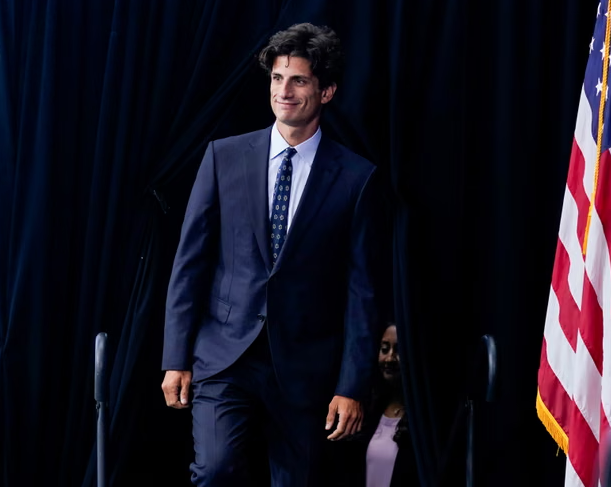
John F. Kennedy’s grandson, Jack Schlossberg, has announced he’s running for Congress — a move that reignites the Kennedy political dynasty just as Democrats face dwindling influence in Washington. Schlossberg, 31, said he will seek the seat being vacated by longtime New York Democrat Jerry Nadler, who after 17 terms decided it’s time for “someone younger” to take over.

“This district should have a representative who can harness the creativity, energy and drive of this district and translate that into political power in Washington,” Schlossberg said in a campaign video posted late Tuesday. His campaign is expected to launch formally Wednesday, following an email announcement to supporters.
The 12th Congressional District — spanning Manhattan’s Upper West Side, Upper East Side, and Midtown — has long been a liberal stronghold. Now, it’s poised to become a stage for another Kennedy bid to reclaim political relevance. While Schlossberg touts youth and energy, his rhetoric echoes a familiar Democratic pattern: promising big while sidestepping accountability for policies that have left New Yorkers grappling with rising costs, rampant crime, and government dysfunction.
Schlossberg, who has built a social media following through snarky posts and political jabs, has made a name for himself partly by attacking members of his own famous family. He’s repeatedly criticized his cousin, health secretary Robert F. Kennedy Jr., mocking him last month on Instagram with a Halloween “MAHA Man” costume — a jab at Kennedy’s “Make America Healthy Again” message — which he described as including “measles.” The move underscored his embrace of the modern progressive playbook: performative politics over substance.
In an interview with The New York Times, Schlossberg claimed, “There is nothing our party can’t do to address costs of living, corruption and the constitutional crisis that we’re in. But without the control of Congress, there’s almost nothing that we can do.” His statement laid bare what many conservatives see as the Democratic approach to governance — expanding federal power rather than empowering citizens.
The Kennedy brand once symbolized optimism and public service; today, it risks becoming shorthand for political entitlement. Schlossberg’s bid, launched amid Democrats’ struggle to regain control of the House, may appeal to nostalgic voters but could also signal a party recycling old names instead of new ideas.
Schlossberg compared himself to Zohran Mamdani, the newly elected progressive mayor of New York City, saying, “If Zohran Mamdani and I have anything in common, it’s that we are both trying to be authentic versions of ourselves and meet people where they are.” For conservatives, the comparison is telling: both candidates represent the ascendant far-left movement driving urban policy — and driving away the working families who once made cities thrive.
As Democrats rally behind legacy names and identity politics, Schlossberg’s campaign may remind voters that dynasties don’t deliver solutions — results do.