
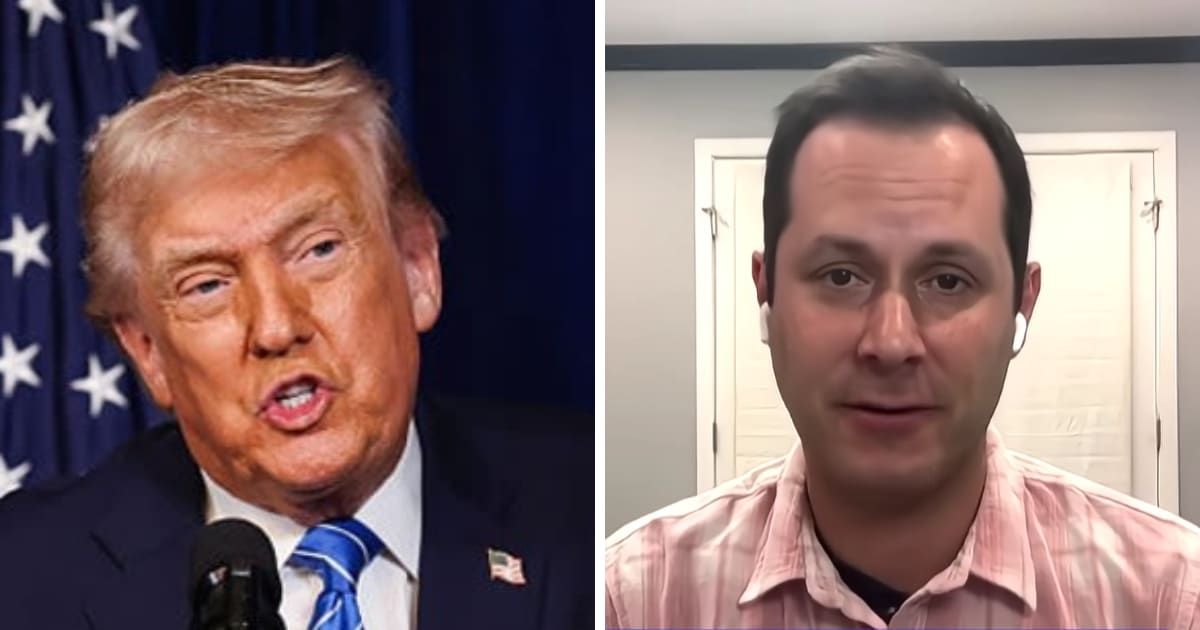
Comments made Wednesday on “MS NOW Reports” placed renewed attention on the intersection of politics, cultural institutions, and presidential legacy, following discussion about President Donald Trump’s name being added to the Kennedy Center and the potential for that decision to be reversed under a future administration. The exchange came amid reports that two New Year’s Eve events at the Kennedy Center had been canceled, developments that host Laura Barron-Lopez described as part of broader fallout surrounding the naming decision.

During the segment, Barron-Lopez said, “Two New Year’s Eve events at the Kennedy Center have been canceled, adding to the fallout that’s hit the performing arts venue since President Trump’s name was hastily added to it.” She then asked whether the controversy could have broader political implications, saying, “There’s been a lot of backlash that we’re seeing to the name change. Do you think that this is going to have a big impact or be a bigger problem, not just for Trump, but also the entire Republican Party?”
Network contributor Sam Stein responded by framing the issue as both symbolic and politically consequential. He said, “It’s one of those things that can be both a distraction and emblematic of something bigger that would be harmful for the Republican Party. The more that Donald Trump goes about redecorating the White House, the ballroom, and Washington D.C. writ large, the more he seems preoccupied with the ratings that the Kennedy Center honors program and having his name on various institutions, not just the Kennedy center, but the U.S. Institute of Peace, the more voters are going to say, wait a second, why is he prioritizing this stuff versus my basic cost of living?”
Stein continued by suggesting the issue could resonate with voters concerned about economic pressures and day-to-day expenses, noting that symbolic decisions tied to national institutions can take on greater meaning when households are focused on affordability and financial stability. He added, “And so for that reason, I think Trump is doing some harm to himself and running some risk.”
Looking ahead, Stein predicted that institutional naming decisions tied to a specific administration would not be permanent. “Of course, all of this is going to be reversed as soon as a Democratic president takes office,” he said. “I have to imagine that any time the power is going to change, they’re going to say, okay, we’re going to take that name off of the Kennedy Center, not exactly something we want.” He concluded by characterizing the move as temporary, saying, “And so it’s all for short term gain, and it makes you wonder why he’s doing it. And the only obvious answer to that is that it’s feeding his very sizable ego.”
The discussion highlights how leadership decisions affecting nationally recognized cultural institutions often extend beyond the arts themselves, raising questions about permanence, public funding, political transitions, and the role of government-linked organizations in reflecting—or resisting—the priorities of changing administrations. As control of the executive branch shifts over time, such decisions can become case studies in how closely public institutions are tied to political leadership and how easily those ties can be undone.