
Israeli Prime Minister Benjamin Netanyahu used this year’s U.S. Embassy Independence Day celebration in Jerusalem to send a clear message: promises made, promises kept. Speaking alongside U.S. Ambassador Mike Huckabee and his wife Janet, Netanyahu praised the enduring U.S.-Israel bond—“Israel has no greater friend than America and America has no better friend than Israel”—and then pivoted to the news that Israel had just taken out Hamas commanders meeting in Doha, Qatar.

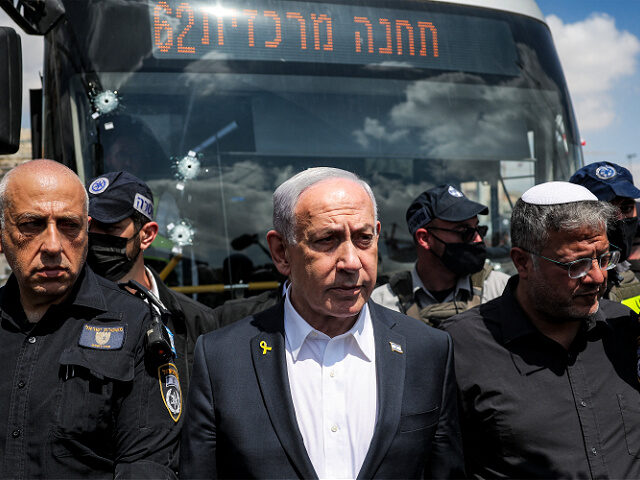
The strike came on the heels of fresh bloodshed. Hamas had proudly claimed responsibility for attacks that killed six civilians waiting at a Jerusalem bus stop and four Israeli soldiers in Gaza. Netanyahu confirmed that those targeted in Doha were the same masterminds who “planned, launched, and celebrated” the October 7 massacre. He did not mince words, recalling “the savage murder of 1,200 people, the beheading of men, the rape and murder of women, the burning of babies, [and] the taking of over 250 hostages, innocent hostages: grandmothers, grandchildren, Holocaust survivors.” His conclusion was resolute: “At the beginning of the war, I promised that Israel would reach those who perpetrated this horror. And today, Israel and I have kept that promise.”
The operation, code-named “Summit of Fire,” was conducted with what Israel described as strict precautions to limit civilian harm. Still, it marked a dramatic shift: for years, Hamas leaders have lived comfortably in Qatar, far from the conflict they fuel, even as the country plays host to the U.S. military’s Al Udeid Air Base and enjoys the privileges of a major non-NATO ally. Qatar quickly condemned the strike as a violation of international law—an ironic protest from a nation that shelters terrorist masterminds while claiming diplomatic neutrality.
The Biden White House called the strike “unfortunate,” fretting over the optics of a U.S. ally being hit, though it admitted eliminating Hamas’s leadership was a “worthy goal.” Notably, President Donald Trump was briefed beforehand. In contrast to the meandering tone from Washington, Trump moved quickly—sending Special Envoy Steve Witkoff to notify Qatar and personally pressing both Netanyahu and Qatari officials on securing the release of hostages. Netanyahu made clear that Israel acted “wholly independently” and took “full responsibility,” but he also underlined that Trump’s ceasefire proposal remains Israel’s path to peace: free all hostages, disarm Hamas, and the war ends immediately.
The prime minister urged Palestinians not to be manipulated by terrorists living in “sumptuous villas, away from the battle scene,” who treat ordinary families as human shields. “Stand up for your rights and for your future,” he said. “Accept President Trump’s proposal … There is no limit to our common future.” Defense Minister Israel Katz reinforced that message, warning that if Hamas clings to power, Gaza itself risks devastation.
The evening closed on a lighter note, with Netanyahu thanking Ambassador Huckabee and joking that if Israel “had five or six more Mike Huckabees,” it wouldn’t face so many public diplomacy challenges. Yet the broader point of his speech was unmistakable: while Hamas’s leaders try to hide behind diplomatic cover and media narratives, Israel will hold them accountable. And with Trump’s plan on the table, the path forward could be swift—if only terrorists valued peace more than their own power.