
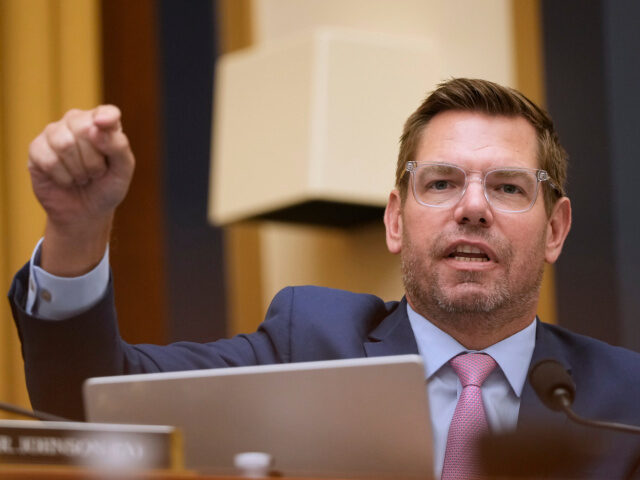
On Christmas Day, Rep. Eric Swalwell of California shared a post on X that quickly drew attention for its use of religious imagery tied to current immigration policy. The post depicted a nativity scene showing Immigration and Customs Enforcement (ICE) agents raiding the stable in Bethlehem, with the Holy Family portrayed as targets of enforcement. Alongside the image, Swalwell wrote, “May this be the last Christmas we live this nightmare,” framing the scene as a commentary on contemporary immigration practices in the United States.

The post likened Jesus, Mary, and Joseph to illegal migrants, a comparison that prompted renewed discussion about the historical and biblical account of the Nativity. According to the Gospel of Luke, Mary and Joseph traveled to Bethlehem in response to a decree issued by Roman Emperor Caesar Augustus requiring people to register in their ancestral towns. The passage states: “In those days a decree went out from Caesar Augustus that all the world should be enrolled. This was the first enrollment, when Quirinius was governor of Syria. And all went to be enrolled, each to his own city. [So] Joseph also went up from Galilee, from the city of Nazareth, to Judea, to the city of David, which is called Bethlehem, because he was of the house and lineage of David” (Luke 2:1–4). The text describes the journey as a lawful response to a government mandate rather than an act of illegal migration.
The broader claim that Jesus was a refugee has been the subject of longstanding debate among historians and theologians. Biblical accounts indicate that after Jesus’ birth, Mary and Joseph fled with him to Egypt to escape King Herod’s order to kill male infants. Egypt at the time was part of the Roman Empire, and the family later returned to Galilee after Herod’s death, where Jesus spent most of his early life. These details are frequently cited in discussions about historical context, religious tradition, and how ancient events are interpreted through modern political frameworks.
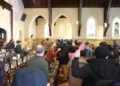
Swalwell’s post follows other recent instances in which religious imagery has been used to comment on immigration policy. A progressive church in Evanston, Illinois, recently faced criticism after displaying a nativity scene that showed a zip-tied baby Jesus, Roman soldiers depicted as ICE agents, and Mary and Joseph wearing gas masks. Lake Street Church of Evanston explained its display in a Facebook post, stating that it “reimagines the nativity as a scene of forced family separation, drawing direct parallels between the Holy Family’s refugee experience and contemporary immigration detention practices.”
These episodes highlight how traditional religious symbols continue to be invoked in present-day debates over immigration enforcement, border security, and the role of government authority. The reactions underscore the enduring sensitivity around faith-based imagery, historical interpretation, and public policy, particularly when long-standing religious narratives intersect with modern political messaging.