

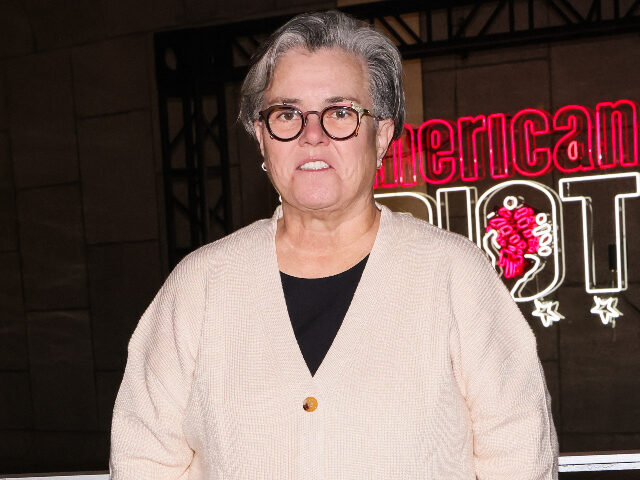
The latest round of celebrity political theatrics comes from Rosie O’Donnell, who now says her 12-year-old autistic child is deeply distressed over President Donald Trump — to the point of “smashing her hand on the table.” It’s a familiar pattern: Hollywood figures retreat overseas, consume a steady diet of activist media, and then express shock when their own children internalize the fear and outrage they model every day. But this incident raises a deeper issue about the responsibilities of parents, the influence of political rhetoric on kids, and what happens when the loudest voices in entertainment treat politics like a perpetual emergency rather than a civic process.

O’Donnell told Jim Acosta that “My daughter is now saying, ‘Damn him, damn Trump’ and smashing her hand on the table.” She added that the child believes the former president “made us move in order for our own safety, and now he’s destroying the country!’” That belief didn’t come out of nowhere. O’Donnell herself admits, “Listen, she lives here [Ireland], she hears what I’m saying to you — not that I go around speaking like this every day if it’s not an interview — but I think to myself, ‘You don’t want to give this to her.’” Yet she continues describing the mentality behind her political posture: “Whatever this thing is, of me thinking that I have to somehow stand in defiance of him. No, no, I don’t, somebody can tap me out, you know?” O’Donnell added, “I did 22 years, I don’t really need to do any more, and I don’t want my kid to be so affected by it, and, you know, she has autism.”
Acosta responded, “But she recognizes what’s going on,” prompting O’Donnell to pause before answering, “Yes.”
What’s notable is how dramatically O’Donnell frames her family’s move. She left the United States in January, just days before President Trump’s second inauguration, relocating to Ireland with her child, Clay, who identifies as non-binary. The narrative she has built around that decision carries the unmistakable tone of ideological alarm — the kind that treats political differences as existential crises rather than democratic disagreements. And while O’Donnell insists she doesn’t speak this way “every day,” her TikTok account tells another story: video after video of fear-driven rants about Trump, filmed right from home.
It didn’t take long for social-media users to call out what they saw. One X user posted, “Rosie’s so consumed by Trump hate that she’s poisoning her own autistic daughter with it. Passing TDS to a vulnerable kid isn’t activism; it’s neglect. Time for her to do some self-reflection before it does more damage. Poor kid.” Another wrote, “You ripped your autistic kid from her home because you scared her into believing you guys weren’t safe in America. And somehow you don’t understand that it’s you, not Trump, who is responsible.” A third was even blunter: “She’s making her daughter miserable because she’s a complete idiot.”
Others pointed to a pattern — a refusal to take responsibility for choices made in the name of political panic. “Trump didn’t force her to move, that was her decision,” one user said. “Her daughter is only emulating behaviors learned from prune-face’s constant hate mongering around the house.” Another argued, “Blaming her entire miserable existence on Trump then ultimately blaming him for her daughter’s behavior… Rosie is a crappy parent who left to Ireland for attention. A horrible individual.” One described the situation as “Child abuse,” adding, “This is one of the most grotesque things I’ve seen out of Rosie and that’s a high bar.”
The reaction struck a chord because it touches on something many Americans quietly worry about: children being swept into the emotional chaos of adult political obsessions. When politics becomes a fear-based worldview instead of a discussion about policy, families — especially vulnerable kids — absorb the stress. And when public figures amplify those extremes, it creates a culture where anxiety is rewarded, civility is abandoned, and thoughtful, common-sense perspective is dismissed as naïve.
That’s why this story matters beyond celebrity gossip. It highlights the consequences of a broader trend: ideological panic replacing grounded civic engagement. Open disagreement is healthy in a free society. Raising children in an atmosphere of alarm, resentment, and imagined danger is not. No politician — including Donald Trump — controls where Rosie O’Donnell lives. But her rhetoric, and the example she sets at home, clearly influences how her child experiences the world.
If anything, this episode is a reminder that while government decisions do impact our lives, the culture parents create inside their own homes matters just as much. Kids deserve stability, not political dread. They need thoughtful leadership, not emotional theatrics. And they benefit most from adults who understand that personal responsibility, not public figures, ultimately shapes family wellbeing.






Our country is way better off without people like Rosie in it! I wish a lot more liberals would do like Rosie and leave our country.
Rosie is no different than Robert Diniro. They are left-wing activist that are completely washed up who are trying to become relevant again. Rosie says her daughter is saying damn him damn him, Diniro says fuck Trump fuck Trump fuck Trump fuck Trump. Very classy entertainers.