
Claims about the economic role of Somali migrants in Minnesota are drawing renewed attention as the state continues to confront large-scale welfare fraud cases and broader questions about immigration, public spending, and accountability. Minnesota has faced several high-profile fraud investigations in recent years involving state and federally funded assistance programs, with some cases totaling billions of dollars. Many of those cases, according to court filings and law enforcement announcements, have involved individuals connected to Somali-run organizations that expanded rapidly after the community began growing in the state in the 1990s.

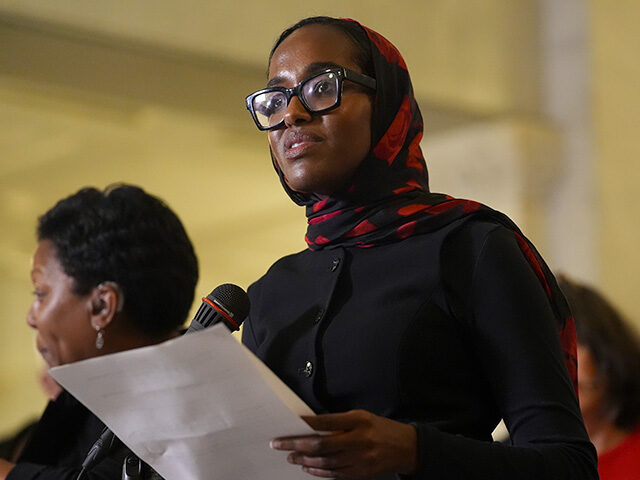
Against that backdrop, Democratic Minnesota State Sen. Zaynab Mohamed, who was born in Somalia and elected to the legislature in 2023, has publicly argued that the Somali community is essential to the state’s economic survival. In a recent interview, Mohamed said, “We are in every industry, and Minnesota would not be able to survive, nor thrive, without the Somali community.” Her comments come as state agencies and federal prosecutors continue to investigate misuse of public funds tied to childcare, food assistance, and other welfare programs overseen by Minnesota’s Department of Human Services.
Mohamed has also said that criticism directed at Somali migrants is racially motivated and warned that political opposition would simply shift to other minority groups if Somalis left the state. She has been outspoken against U.S. immigration laws and has criticized former President Donald Trump’s immigration policies. During a public event, she said, “This is an unserious president who’s been speaking [about] people of our community this way for the last decade,” and added, “I think I was more shocked at the level of action that he’s taken since those statements that he made.” At another Democratic Party event in Minnesota, Mohamed said Trump’s immigration policy is “not about crime. It’s not about safety. This is about purging people like me from this country.”
The debate has intensified as independent reporting and citizen journalism have highlighted specific fraud allegations. Citizen journalist Nick Shirley has documented visits to multiple Somali-operated childcare facilities in Minneapolis, reporting that several sites showed no children present despite receiving millions of dollars in public funding. State and federal authorities have previously confirmed investigations into similar claims, emphasizing compliance failures, oversight gaps, and alleged misuse of taxpayer funds.
Other Somali public figures in Minnesota have also weighed in. During his unsuccessful run for mayor of Minneapolis, Mohamed’s brother-in-law, Omar Fateh, made comments claiming that white people pose a threat to America. Salma Hussein, a Somali elementary school principal, told CBS News that she feels compelled to carry proof of legal residency, saying, “We’re Somali Americans who are contributing in many aspects of society right now and we want to be able to bring attention to that.” A Somali migrant who became a county sheriff in Minnesota stated publicly that he now works for Somalis rather than Americans. Another Somali migrant posted on TikTok, criticizing Americans for focusing on fraud cases and asserting that the country should be thankful for Somali success in Minnesota.
National advocacy groups have echoed similar themes. Suleiman Adan, deputy executive director of the Minnesota chapter of the Council on American-Islamic Relations, told CNN that “Somalis are as Minnesota as the state fair. That is, you know, we belong.” At a recent community event, local Somali officials stated that Minnesota is now their land and emphasized their permanence in the state.
Media coverage has also focused on economic impact claims. The Minneapolis Star Tribune reported that Somalis contribute “$8 billion” to Minnesota’s economy. Critics have countered by pointing to estimates of welfare fraud totaling far higher amounts, raising questions about net fiscal impact and the effectiveness of oversight mechanisms. According to data cited by Breitbart News, more than eight in ten Somali refugees in Minnesota receive some form of state or federal assistance. Fox News reported that “36% of Somali Minnesotans lived below the poverty line from 2019 to 2023 — more than triple the U.S. poverty rate of 11.1%,” and that the median income for Somali-headed households in Minnesota is $43,600, compared with a national median of $78,538.
State and local leaders have defended the community’s presence and legal status. Minneapolis Mayor Jacob Frey told CNN, “The Somali community is almost universally American citizens. They have come here legally. They have contributed greatly to the fabric of who we are. They have benefitted Minneapolis in a really beautiful way.” Gov. Tim Walz has similarly said that “Minnesota is a better place because Somalians chose to live here.”
The debate extends beyond economics to broader questions of assimilation, law enforcement, and the role of government in managing large refugee populations. Author and former Somali refugee Ayaan Hirsi Ali has argued that cultural integration is central to resolving these tensions. In a December 10 op-ed, she wrote, “I grew up in a Somali clan-based society … [where] Loyalty to kin was absolute. Loyalty to the nation was theoretical at best.” Her remarks are frequently cited in discussions about how federal immigration decisions intersect with social cohesion, public trust, and long-term institutional stability.
As investigations continue and political leaders make competing claims, Minnesota’s experience remains a focal point in the national conversation over immigration policy, taxpayer accountability, and the responsibilities that accompany public assistance programs.