
The federal government shutdown is entering its most volatile phase yet — and it’s exposing the deep divisions in Washington over spending, accountability, and the proper role of government.

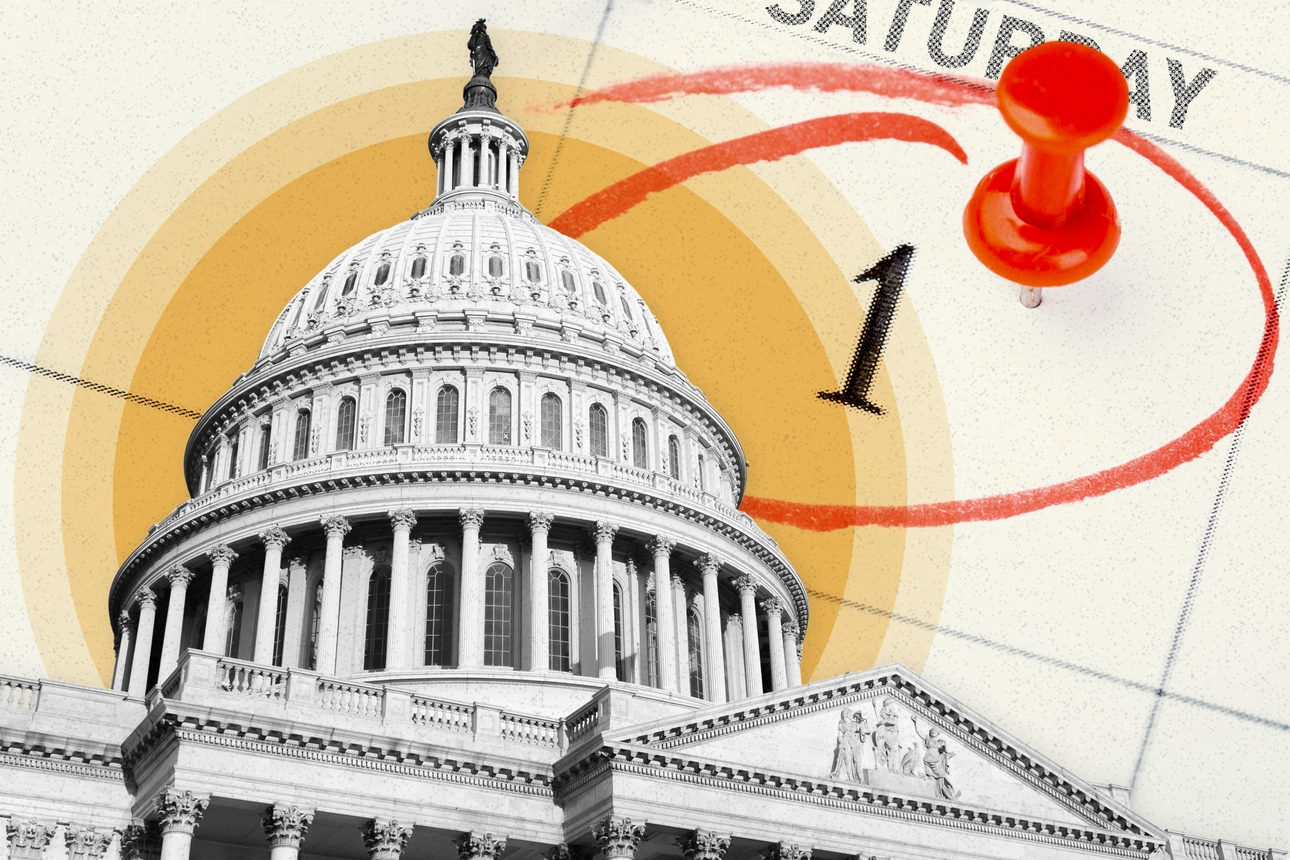
With President Donald Trump abroad and Congress locked in yet another budget standoff, key federal programs are running out of cash. By Nov. 1, funding deadlines for food aid, early childhood education, and small-community air service will collide — testing how much longer Washington can delay hard choices while ordinary Americans feel the pinch.
This isn’t just a political fight. It’s a moment of reckoning for a bloated federal system long overdue for reform. For decades, both parties have kicked the can down the road, piling on debt while expanding the size and scope of government. Now, the bill is coming due.
Thousands of federal employees will miss full paychecks this week, a development that could again disrupt TSA screenings and air traffic control — the same scenario seen during the 35-day shutdown of 2019. “Things are about to get worse,” Senate Majority Leader John Thune warned. But the crisis unfolding now is as much about leadership as it is about funding.
While Democrats demand blanket spending increases, Trump has taken a different tack — using executive discretion to protect what matters most: national security and those who serve. Earlier this month, he made an unprecedented move to pay active-duty members of the military by reallocating funds from other accounts. It was a bold, practical decision that put soldiers’ pay ahead of bureaucracy.
Still, even Trump’s resourcefulness can only go so far. Agencies tied to massive entitlement programs are quickly running dry. SNAP, which provides food aid to more than 40 million people, is expected to exhaust its funds within days. The administration has resisted using emergency accounts to prop up the program — a sign of fiscal discipline that stands in stark contrast to the free-spending habits of previous administrations. Some lawmakers want the White House to raid an agriculture contingency fund, but with only $5 billion left, that fund can’t even cover one month of SNAP’s $9 billion burn rate.
Other taxpayer-backed initiatives are also running on fumes. Head Start, the early education program for children under six, will stop receiving funding this weekend — impacting 130 centers across 41 states and Puerto Rico. Federal dollars that fuel the WIC nutrition program for women and infants will also dry up unless the administration moves another $300 million from elsewhere. And the Essential Air Service, which subsidizes flights to rural towns, is nearly out of money — a warning sign for communities dependent on Washington to sustain routes that can’t survive on their own.
The White House has already tapped $42 million to keep the air service temporarily afloat. But the broader reality remains: federal programs are sprawling, inefficient, and designed to collapse under their own weight when accountability disappears.
Military families are again watching the calendar nervously, as another round of paychecks comes due. Trump’s earlier move to tap $6.5 billion from research accounts covered the first round, but that well is nearly dry. In a surprising twist, Pentagon officials said Friday that they had accepted an anonymous $130 million donation from a private citizen to help cover salaries — a sign of how seriously the Commander in Chief’s supporters take their commitment to America’s armed forces.
Meanwhile, tens of thousands of civilian employees are missing pay. Congressional aides are joining them — though lawmakers themselves, shielded by the Constitution, continue to collect their checks on time.
On Capitol Hill, Democrats have blocked multiple proposals to pay troops and critical workers during the shutdown, arguing it would give Trump too much power over who gets paid. Speaker Mike Johnson has refused to bring forward piecemeal bills, calling them distractions that “take the pressure off” Senate Democrats like Chuck Schumer to finally negotiate a full reopening deal.
The deeper issue isn’t just this week’s missed paychecks or frozen programs. It’s the Washington mindset — one that treats shutdowns as crises instead of wake-up calls. Trump’s approach may be unconventional, but it reflects a reality most Americans already understand: the country can’t keep writing blank checks. Tough priorities have to be set.
The question now is whether Congress will do its job — or continue using American families, soldiers, and taxpayers as leverage in yet another spending standoff.
As Trump once said, “You can’t be afraid to shake things up.” Washington’s bureaucracy is long overdue for that shake-up — and this shutdown may finally prove who’s willing to fix it, and who just wants to keep feeding it.