
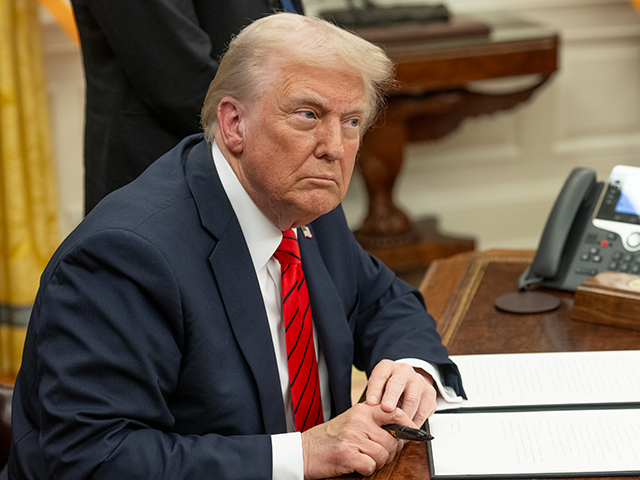
President Donald Trump is once again doing what weak politicians refuse to—confronting crime and disorder head-on. In a recent interview, Trump confirmed he’s considering the reopening of mental health institutions, an idea many Americans quietly agree is long overdue.

When asked if he would “be open to the government reopening insane asylums for people with serious mental illness,” Trump responded, “Yeah I would.” He explained further, “Well, they used to have them, and you never saw people like we had, you know, they used to have them. And what happened is states like New York and California that had them, New York had a lot of them. They released them all into society because they couldn’t afford it.”
Trump went on to recall, “You know, it’s massively expensive. But we had, they were all over New York. I remember when I was growing up, Creedmoor. They had a place, Creedmoor, they had a lot of them, Bellevue, and they were closed by a certain governor. And I remember when they did, it was a long time ago, and I said they didn’t release these people? And they did. They released them into society, and that’s what you have. It’s a rough, it’s a rough situation.”
As Trump put it plainly: “Because, you can’t have these people walking around.”
That blunt honesty highlights a reality most Americans see daily but few politicians dare to address. Decades of progressive cost-cutting and misplaced compassion dumped thousands of severely mentally ill individuals into public spaces. The result? Unsafe cities, overwhelmed police, and communities bearing the cost. Trump’s willingness to revisit institutional care recognizes that public safety must come first.
And he’s not just talking—he’s delivering. After deploying the National Guard and taking direct control over Washington, DC’s crime crisis, Trump declared, “So it turned out, it was amazing, because we’re a crime free zone now. I mean, you see what’s going on? There’s no crime. People are walking to restaurants. They’re free. It’s almost like we just freed the whole Washington, DC.”
He added, “I mean, I knew we’re going to do it, but it went faster than I thought… Now, in two weeks, it’s going to be even better. I’m calling it, it’s a crime free zone now. People are going to restaurants that haven’t gone out in four years. They didn’t even want to go in their car because they get the you know, they have..,you see, the carjacking is down 87 percent.”
The results speak for themselves: carjackings down nearly 90 percent, violent crime collapsing, and a city finally breathing again. Even Democratic Mayor Muriel Bowser—long hostile to Trump—was forced to give credit where it’s due. “We greatly appreciate the surge of officers that enhance what MPD has been able to do in this city,” she admitted, acknowledging that neighborhoods “feel safer and are safer.”
That rare moment of bipartisan agreement underscores a simple truth: when government prioritizes law and order over politics, American families benefit. Trump’s approach—firm, unapologetic, and rooted in common sense—is proof that restoring safety doesn’t take decades of bureaucracy. It takes leadership.