
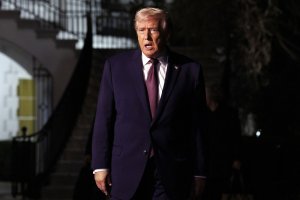
President Donald Trump said in an interview published Sunday that the United States needs to annex Greenland “for defense,” remarks that prompted renewed objections from Denmark and calls for Washington to stop discussing the idea. Trump has raised the possibility of annexing Greenland repeatedly since before returning to office in January 2025, and the proposal has consistently been rejected by officials in Denmark and in Greenland itself, which is an autonomous territory within the Danish kingdom.

The comments came amid heightened attention on U.S. foreign policy following the apprehension of Venezuelan President Nicolás Maduro. At a news conference Saturday morning, Trump and Secretary of State Marco Rubio both made statements that suggested broader U.S. strategic considerations in the Americas. When asked in a Sunday interview with The Atlantic whether Maduro’s apprehension should be viewed by other nations — including Greenland — as a signal that the administration might pursue military action to achieve additional objectives, Trump declined to draw a direct comparison. “They are going to have to view it themselves,” Trump said. “I really don’t know … But we do need Greenland, absolutely. We need it for defense.” He also stated that Greenland is “surrounded by Russian and Chinese ships.”
Greenland occupies a significant geographic position in the Arctic and already hosts the United States’ northernmost military base. The island, the world’s largest, is largely covered by ice but is known to contain oil, natural gas, and mineral resources. Denmark is a member of NATO, and Greenland falls under the alliance’s security framework. Denmark and the United States also maintain a bilateral defense agreement that grants the U.S. military broad access to Greenland for strategic purposes.
Trump has previously declined to rule out the use of force to acquire Greenland. In May, he said he would not “say I’m not going to do it but I don’t rule out anything … We need Greenland very badly.” In a nationally televised speech in March, Trump reiterated the importance of the territory, saying his administration was “working with everybody involved to try and get it.” He added, “We need it really for international world security,” and said he believed “we’re going to get it, one way or the other.”
Danish Prime Minister Mette Frederiksen responded Sunday with a statement urging the United States to stop raising the prospect of annexation. “I must say this very directly to the United States: It makes absolutely no sense to talk about it being necessary for the United States to take over Greenland. The United States has no legal right to annex any of the three countries in the Realm of the Kingdom,” she said. Frederiksen emphasized that Denmark and Greenland are protected under NATO’s collective defense clause and noted that Denmark already shares extensive defense cooperation with the United States. “I therefore strongly urge that, on the part of the United States, threats against a historically close ally — and against another country and another people who have very clearly stated that they are not for sale — come to an end,” she said.
Greenland Prime Minister Mute Egede has also addressed the issue publicly. In a Facebook post earlier this year, he stated that Greenlanders would decide their own future and do not wish to become Americans any more than they wish to remain Danish. Meanwhile, Trump’s recently appointed Greenland envoy, Louisiana Gov. Jeff Landry, said in December that the United States was not going to “go in there trying to conquer anybody.” Landry also said he was grateful to Trump for the “honor to serve you in this volunteer position to make Greenland a part of the United States.”
Diplomatic responses have continued online as well. Denmark’s ambassador to the United States, Jesper Moeller Soerensen, responded on X to a post by Katie Miller, wife of White House Deputy Chief of Staff Stephen Miller, that showed a U.S. map over Greenland with the word “SOON.” “Just a friendly reminder about the U.S. and Denmark: We are close allies and should continue to work together as such,” Soerensen wrote in his reply posted on X.