Federal officials have temporarily frozen certain child care payments to Minnesota providers as part of an ongoing review into alleged misuse of federal funds, according to public statements from the U.S. Department of Health and Human Services. The action follows growing scrutiny of child care operations in the state after multiple reports raised questions about whether some federally funded centers were operating as required while receiving payments intended to support working families and young children.

In a video posted on X, Jim O’Neil, deputy secretary at the Department of Health and Human Services, outlined the administration’s position, stating, “We’re committed to holding bad actors accountable, regardless of rank or office. Anyone who is involved in perpetrating this fraud against the American people should expect to be prosecuted.” Federal officials have said the payment freeze is designed to prevent additional taxpayer dollars from being disbursed while reviews are underway and to ensure that funds are used for their intended purposes.
The decision comes amid broader federal oversight of child care programs that rely heavily on public funding. These programs are supported by billions of dollars annually and are intended to help parents remain in the workforce while ensuring basic standards of safety, staffing, and attendance are met. When questions arise about compliance, federal agencies have authority to pause payments and require additional documentation before releasing funds. Officials indicated that Minnesota’s situation has become a focal point because of concerns raised by recent reporting and on-the-ground inspections.
Federal authorities have emphasized that the freeze is not limited to Minnesota in principle, but reflects a broader push to tighten oversight of federally funded services. The goal, officials say, is to ensure consistent standards across states and to verify that operators receiving public funds are providing the services for which they are paid. In this context, Minnesota’s review is being closely watched by other states that administer similar programs.
O’Neil cited reporting that has circulated over several years alleging irregularities in Minnesota’s child care system and said recent documentation intensified federal concerns. In a longer statement, he said, “Intrepid journalists have made shocking and credible allegations of extensive fraud in Minnesota’s child care programs. We believe the state of Minnesota has allowed scammers and fake daycares to siphon millions of taxpayer dollars over the past decade.” Federal officials have not publicly identified specific providers but said the scale of the allegations warranted immediate action.
Alex Abrams, assistant secretary at the Administration for Children and Families, which administers federal child care funding, highlighted the size of the federal investment in Minnesota and the potential impact on families. “My office, ACF, provides Minnesota $185 million in child care funds each year. That money should be helping 19,000 American children, including toddlers and infants. Any dollars stolen by fraudsters is stolen from those children,” Abrams said. He added that he recently spoke with state officials and noted ongoing uncertainty about the scope of the problem, explaining that the director of Minnesota’s Child Care Services office “could not tell me with confidence whether those allegations of fraud are isolated or whether there’s fraud stretching statewide.”
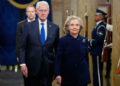
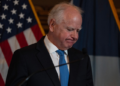
Federal officials detailed several steps being taken to address the situation. O’Neil said, “Today, we have taken three direct actions against the blatant fraud that seems to be rampant in Minnesota. First, I’ve activated our Defend the Spend [accounting] system for all ACF child-care payments across America. Starting today, we require a justification receipt for photo evidence before we make a payment. Second, I just signed and sent a demand letter to Governor [Tim] Walz. I required a full 360 [degree] review of these centers. This includes attendance records, licenses, complaints, investigations, and inspections.” These measures, according to officials, are intended to strengthen accountability and ensure federal dollars are properly documented.
Abrams underscored the broader expectations for states that administer federal programs, stating, “ACF expects every state to uphold the highest standards of oversight, monitoring, and accountability for federal dollars — Minnesota is no exception.” State officials have not yet released detailed public findings from their reviews, and no final determinations about the extent of wrongdoing have been announced.
For families and providers, the freeze introduces uncertainty as reviews continue. Federal officials have said legitimate operators are expected to be able to document compliance and resume payments once requirements are met. More broadly, the situation highlights ongoing challenges in balancing rapid distribution of public assistance with the need for rigorous oversight, particularly in programs that serve vulnerable populations and involve substantial taxpayer funding.