
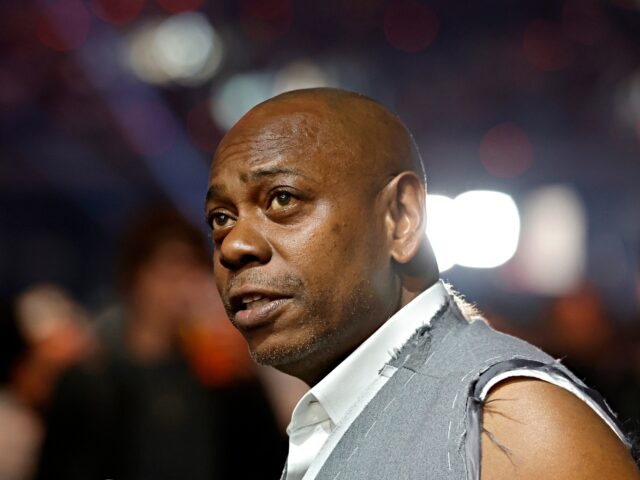
Comedian Dave Chappelle addressed the September murder of Turning Point USA founder and conservative media personality Charlie Kirk in his new Netflix stand-up special, The Unstoppable, commenting on how the killing has been publicly framed and discussed in the weeks since it occurred. Kirk’s death prompted widespread attention across political, media, and cultural circles, with some figures drawing historical comparisons that Chappelle directly referenced during his performance.

In the special, Chappelle rejected comparisons made by some commentators between Kirk and civil rights leader Martin Luther King Jr., calling such claims excessive. “I’ll tell you what I don’t believe, and the whites were quick to say this. They said, ‘Charlie Kirk is this generation’s Martin Luther King [Jr.]’ No, he’s not! Yeah, that’s a reach.” His remarks came as part of a broader reflection on how public figures and audiences respond to political violence, particularly when it targets well-known individuals.
Chappelle also described his personal reaction to the killing, emphasizing the shock it caused him as someone whose profession involves public speech. “If you talk for a living and see Charlie Kirk get murdered that way, Imma be honest, n—-: I was shook,” Chappelle said in the Netflix stand-up show. “I mean, Charlie Kirk was the wholesome white guy. And they killed this motherf—er? I said, ‘These whites…never seen ’em like this. They’re playing for keeps!’” He followed by clarifying his intent, stating, “I’m not making light of Charlie Kirk dying, but I’m not sure what it means, and I’m not sure I believe what they say it means.”
Kirk’s murder has raised broader questions about political rhetoric, public safety, and how high-profile violence is interpreted across ideological lines. The incident occurred amid heightened national debate over political extremism, security at public events, and the risks faced by prominent speakers. Chappelle’s comments focused less on policy and more on how narratives form quickly after such events, particularly when symbolic comparisons are introduced into public discourse.
In the same special, Chappelle shifted to other cultural controversies, including criticism of fellow comedian Bill Maher. Addressing backlash over his participation in the Riyadh Comedy Festival in October, Chappelle expressed frustration with Maher’s public remarks. “You know, and Bill Maher, the famous comedian,” Chappelle said, “I’ve known Bill since I was like 18, 19 years old, and I’ve never said this publicly, but f— that guy.” He continued, “I’m so f—ing tired of his little smug cracker-a– commentary.”
Chappelle was responding to comments Maher made during an October episode of Real Time, where Maher said, “Dave Chappelle… was in the press today saying that you can speak more freely over here than in America… It is not true.” Maher also suggested Chappelle perform jokes about the Prophet Muhammad while in Riyadh to test those claims. The Riyadh Comedy Festival featured performances by Bill Burr, Kevin Hart, Pete Davidson, Russell Peters, Gabriel Iglesias, Louis C.K., and Chappelle.
The festival appearances drew criticism from some activists and entertainers, who accused participating comedians of benefiting financially from a government with strict speech and social laws. Following the backlash, comedian Jessica Kirson apologized publicly, saying her intention in performing in Saudi Arabia was to “help LGBTQ+ people in Saudi Arabia feel seen and valued.”
Chappelle’s special brought together these themes of political violence, free expression, and cultural boundaries, reflecting how entertainment figures increasingly find themselves commenting on events that intersect with politics, security, and public institutions. His remarks did not offer conclusions about the broader meaning of Kirk’s death, instead underscoring uncertainty around how such events are interpreted and memorialized.