

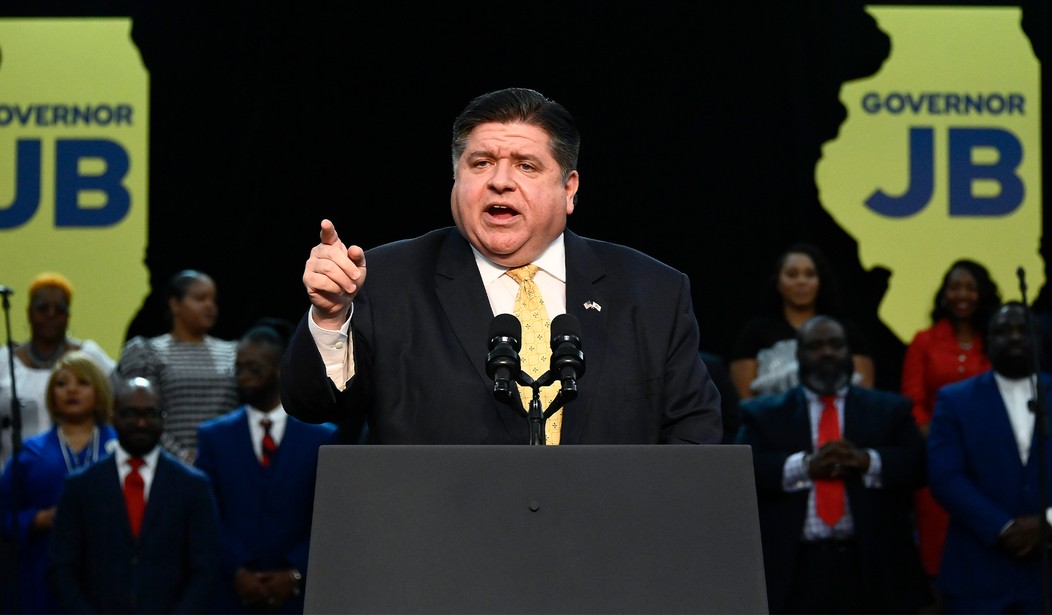
Illinois Gov. JB Pritzker (D) stepped before the cameras in Chicago this week with one clear message for President Donald Trump: keep out. The governor’s press conference came in direct response to Trump’s Friday remarks suggesting Chicago could be next on his list for a National Guard-assisted crackdown on violent crime.

At the time, Trump didn’t mince words. “Chicago’s a mess, you have an incompetent mayor – grossly incompetent – and we’ll straighten that one out probably next. That will be our next one after this,” he declared.
Rather than welcoming help in a city where residents have grown weary of lawlessness, Pritzker drew a line in the sand, pledging to sue if federal forces were deployed. “We will see the Trump administration in court. The state of Illinois is ready to stand against this military deployment with every peaceful tool we have,” Pritzker announced.
Joining him at the podium was Chicago Mayor Brandon Johnson, the very “grossly incompetent mayor” Trump was pointing to. Johnson dismissed the idea of tougher enforcement, instead calling America’s use of incarceration “racist,” “immoral,” and “unholy.” His full remarks revealed just how far Chicago’s leadership is willing to go in resisting a law-and-order approach:
“We cannot incarcerate our way out of violence. We’ve already tried that, and we’ve ended up with the largest prison population in the world without solving the problems of crime and violence. The addiction on jails and incarceration in this country – we have moved past that. It is racist, it is immoral, it is unholy, and it is not the way to drive violence down. We cannot return to the same failed strategies that got us here in the first place.”
Pritzker’s applause for Johnson’s speech was telling. For everyday Americans watching crime climb, the so-called “failed strategies” aren’t stricter policing or tougher sentences. The failures have been the endless cycle of “reforms” that empty jails, eliminate cash bail, and put repeat offenders right back on the street. Those choices—embraced in city after city—have left taxpayers footing the bill while neighborhoods live in fear.
What makes this press conference more than a local story is the national stage it sets. Pritzker, by most accounts, has 2028 presidential ambitions. Yet here he is, publicly embracing the very soft-on-crime policies that have driven people to flee big blue cities for safer states—states that often happen to embrace stronger policing and more traditional approaches to justice.
Republicans in Illinois have long accused Pritzker of being weak on crime, but standing shoulder to shoulder with Johnson against Trump’s call for order underscores the divide in stark terms. Trump has consistently polled well on crime, an issue where Republicans are trusted far more than Democrats. Doubling down on rhetoric that paints enforcement itself as the problem may play well with activist circles, but it alienates the majority of Americans who simply want to feel safe in their communities.
The broader political risk is clear. Democrats suffered in 2020 and 2024 when crime became a key concern for voters. Yet leaders like Pritzker continue to link arms with mayors who argue that holding criminals accountable is “racist.” In doing so, they ignore the families losing loved ones to violence, the small businesses closing their doors, and the residents moving out of once-thriving neighborhoods.
If Pritzker thinks this approach strengthens his national profile, he may find instead that it strengthens the hand of Republicans, both in the 2026 midterms and beyond. And as for Trump, every time Democrats dismiss his warnings about crime and disorder, it only reinforces the contrast he’s been eager to draw: one side promising accountability and security, the other clinging to policies that leave cities in chaos.
Chicago’s press conference was meant to be a show of defiance. Instead, it looked like another display of the very bureaucratic overreach and misplaced priorities that have made America’s great cities less safe and less free. For conservatives watching, it was a reminder of why so many voters are rejecting these failed experiments and demanding common-sense solutions.







Ooh,someone stepped in some doo-doo! Off the streets! So what if the prison is full? Yes,it’s a problem with reform. Aren’t there any trade programs in there? What happened to becoming a contributing member of the community and not a threat? How about getting some businesses involved with more job opportunities for paroled offenders who have skills? Something is wrong, why can’t they admit it?