

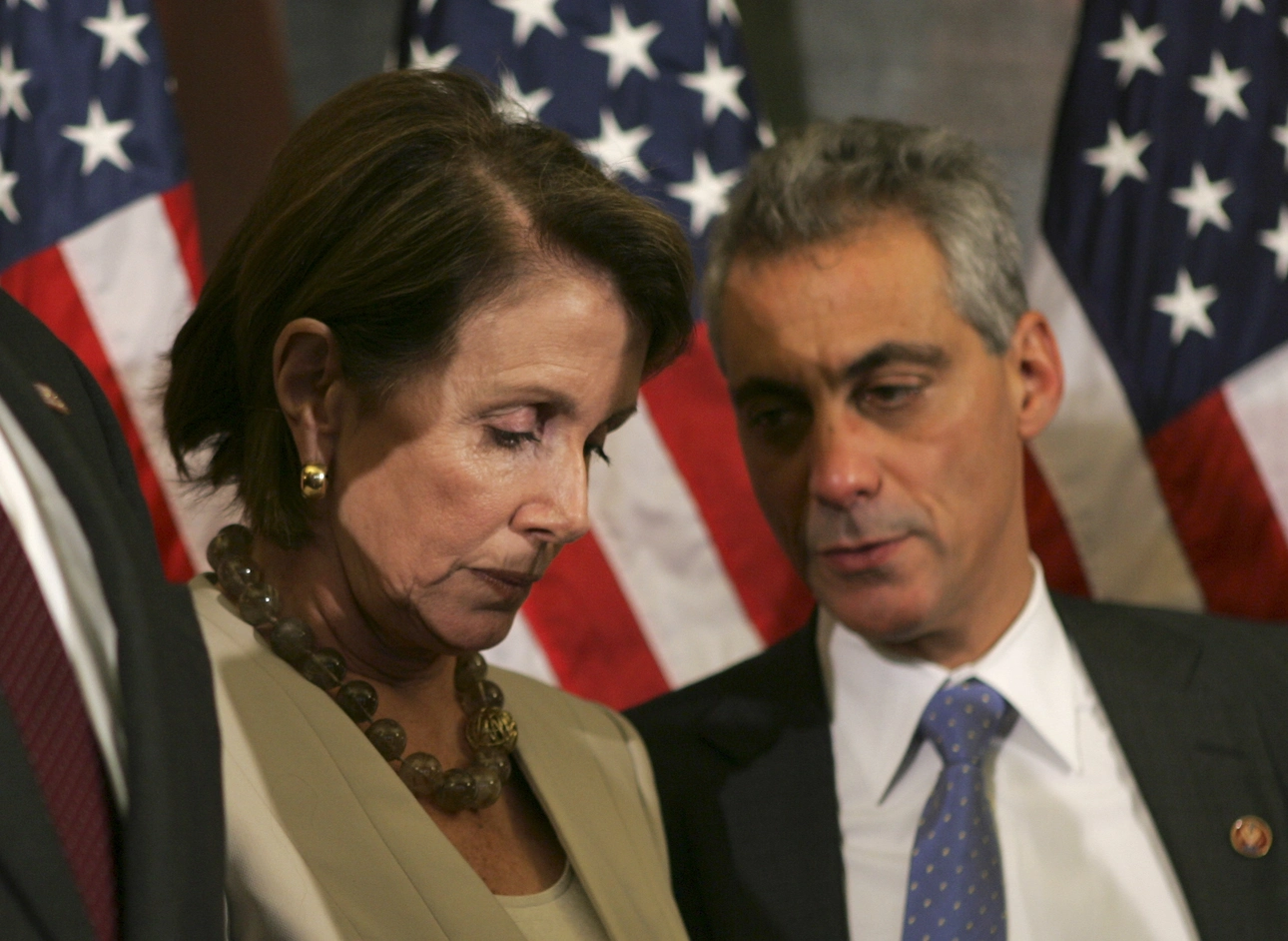
Nancy Pelosi’s retirement marks the end of one of Washington’s most formidable political careers — and one of the most polarizing. As the first woman to serve as Speaker of the House, Pelosi built her reputation on raw political calculation, party discipline, and an uncanny ability to push sweeping liberal legislation through Congress, from the Affordable Care Act to major climate and spending bills.

Rahm Emanuel, who served alongside her in House leadership before becoming President Obama’s chief of staff, offered rare praise in a new interview. “She doesn’t just talk ideas,” Emanuel said. “She knows that winning elections is the only way you can enact those ideas.” It’s a statement that underscores Pelosi’s pragmatic, often ruthless style — one that prioritized consolidating Democratic power above all else. Emanuel recalled that when Obama first met Pelosi, he described her as “99 percent D’Alesandro and 1 percent Pelosi,” referring to her family’s Baltimore political dynasty — a heritage steeped in machine politics and top-down control.
Throughout her tenure, Pelosi left her mark on nearly every major Democratic policy: wage hikes, Wall Street regulations, and massive infrastructure and climate initiatives. But for conservatives, her legacy is a cautionary tale about what happens when political power goes unchecked. She leveraged procedural control, donor networks, and backroom deals to secure votes for trillion-dollar bills — policies that expanded Washington’s footprint while driving up national debt and inflationary pressure. Her legislative victories came at a cost to taxpayers, states’ rights, and the principle of limited government.
Emanuel insists Pelosi stood apart because she “understood power” — how to gain it, wield it, and keep it. Yet, that same iron grip also made her a symbol of Washington’s arrogance and disconnect from everyday Americans. Republicans built entire campaigns around her image — the “Fire Pelosi” banners were practically a fixture for a generation of conservatives. To her critics, she wasn’t just the face of the Democratic Party; she was the embodiment of everything wrong with the D.C. establishment.
Still, Emanuel defended her durability, crediting Pelosi with rebuilding the party after the 2010 losses and providing what he called “a forceful voice countering Donald Trump.” Her ability to outmaneuver internal dissent, he argued, allowed Democrats to push through the CHIPS Act and record spending on renewable energy. To conservatives, those “historic investments” translate into more bureaucratic spending, subsidies for politically favored industries, and deeper entanglement between Washington and private enterprise.
Even Emanuel admitted Pelosi’s brand of leadership would be hard to replicate in today’s fractious Congress. He warned that weakening the Speaker’s authority — as done under former Speaker Kevin McCarthy — could make it harder to “do big and tough things.” Yet Pelosi’s centralized control and partisanship arguably set that precedent herself, hollowing out institutional trust long before McCarthy’s fall.
At 85, Pelosi leaves behind a political empire — and a sharply divided country still feeling the aftershocks of her tenure. As Emanuel quipped, she was “Sam Rayburn in stilettos.” For conservatives, that’s less a compliment than a reminder: power in Washington, once accumulated, is rarely surrendered — and always costly to the American people.