
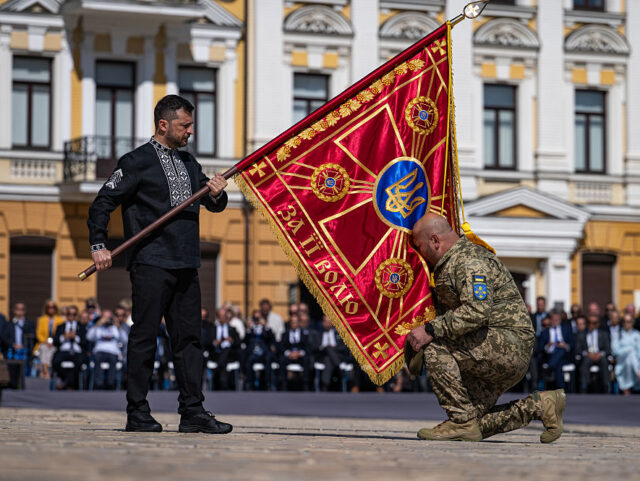
President Volodymyr Zelensky marked Ukraine’s 34th Independence Day with parades and speeches in Kyiv, delivering a message that peace can only come by forcing Russia into a position where Ukraine’s future is secure and self-determined.

Canadian Prime Minister Mark Carney stood alongside Zelensky during commemorations, recalling that Canada was the first nation to recognize Ukrainian independence in 1991. Their joint appearance underscored Western alignment, but it also highlighted the ongoing reality that two and a half years into this war, there is still no clear path to resolution.
Zelensky stated, “We are strong and not alone. Every day we are pushing this war back to where it came from, to the Russian sky and Russian soil… The pressure on Russia and their real losses are increasing. We know their real losses are increasing. We know that peace is coming.”
His words came shortly after former U.S. President Donald Trump suggested Ukraine should consider striking deeper into Russian territory. Zelensky, while avoiding direct reference to Trump’s remarks, pressed the same theme: the need to intensify pressure, declaring, “We need a just peace, a peace where our future will be decided only by us… Ukraine has not yet won, but it has certainly not lost.”
At a joint press conference with Carney, Zelensky doubled down: “We still need to put pressure on Russia, to end this war with dignity, with security, and guaranteed peace.”
Behind these public remarks lies a struggle over diplomacy itself. Russia and Ukraine both claim readiness to meet, yet each accuses the other of sabotaging Trump’s peace process. Ukraine says Moscow is deliberately avoiding leadership-level talks, while Zelensky argued, “Talks between leaders is the most effective way forward… Unlike Russia, Ukraine is not afraid of any meetings with leaders. We are ready to work productively, to the maximum extent possible.”
For conservatives, the stakes here are clear. A prolonged war means continued American taxpayer money flowing overseas, even as U.S. communities face their own economic and security challenges at home. The conflict also serves as a reminder of how fragile global stability becomes when strong borders, energy independence, and decisive leadership are neglected. Zelensky’s push for “guaranteed peace” raises hard questions: how long can Western nations bankroll the fight, and at what cost to their own citizens?
Ukraine’s Independence Day message was meant to inspire resilience, but for many watching abroad, it also underscored the pressing need for common-sense solutions that protect national interests—before another endless conflict drains both treasure and security from those footing the bill.